Music therapy for learning disabled adults
Who are Nordoff and Robbins?
We’re the UK’s largest independent music therapy charity, combining expert training, research and delivery. All our music therapists are Health and Care Professions Council (HCPC) registered, requiring a masters training. Ensuring safe, evidence-based and high quality provision.
On this page you’ll find information on the following. Click on each link to find out more.
- What Nordoff and Robbins music therapy sessions look like
- Why music therapy is so important in adult social care
- How music therapy supports care environments
- Our impact in numbers
- What organisations we work with say about us
- Meet Janet, one of our clients
- Read a testimonial from Horizon Healthcare Homes
If you’d like to learn more, sign up for our webinar on Thursday 23 April (12.30-1.30pm). You’ll hear from our expert speakers and have the chance to ask questions about the benefits of music therapy in adult social care, and how to embed our music therapy services within your organisation.
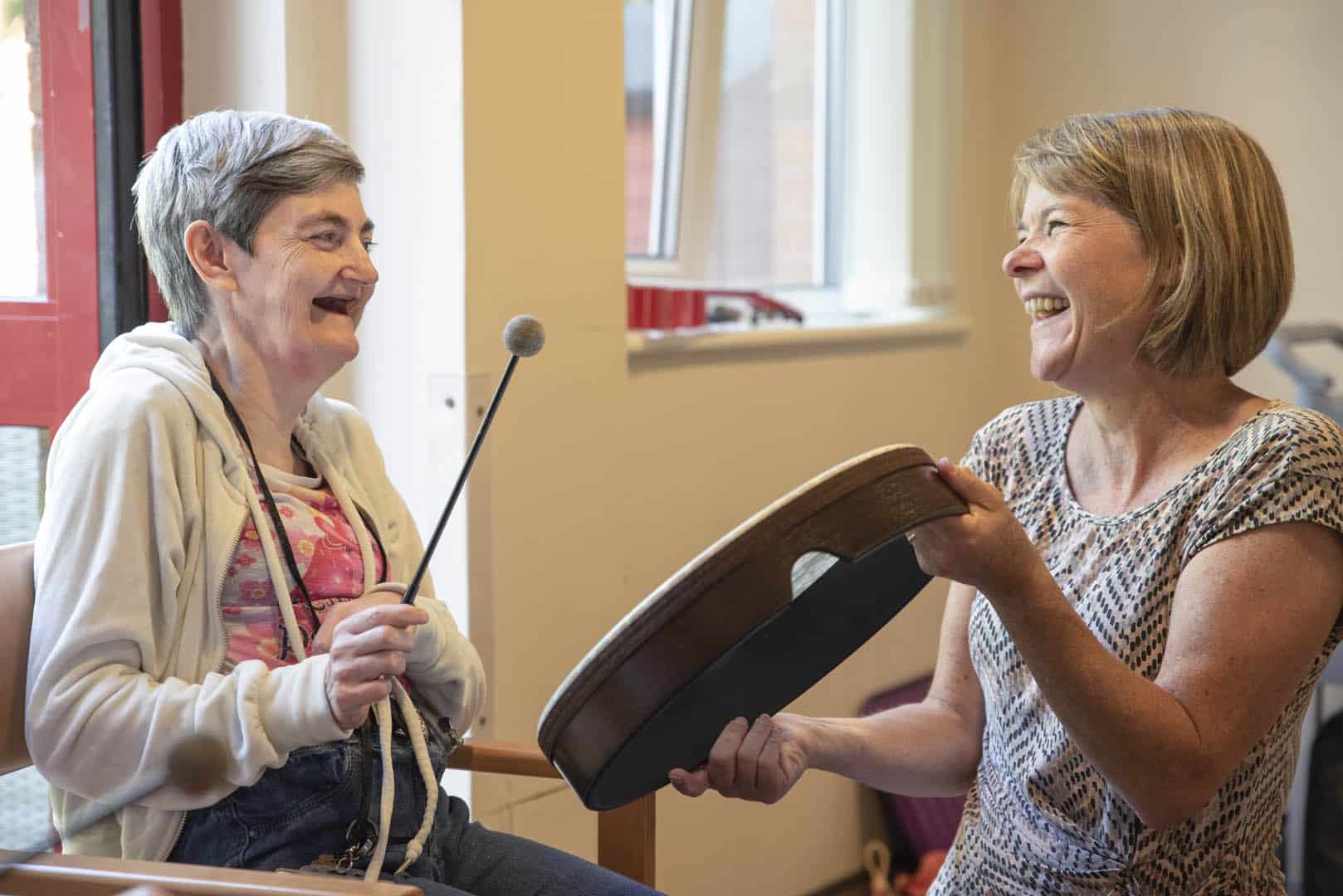
What do Nordoff and Robbins music therapy sessions look like?
Our sessions come in a range of formats depending on the needs of the organisation and people it supports. Some sessions will be large groups, some small groups, pairs, family sessions or 1:1 at bedside, in corridors or in a dedicated space. The music will be as unique and differentiated as the people we work with, but can involve:
- Improvisation with instruments and voice
- Singing familiar or newly created songs
- Listening and responding musically
Our approach is music-centred: communication, agency and connection develops through active music making in a variety of different ways and in collaboration with the music therapist. Music therapy can be particularly of benefit to people who:
- Use little or no spoken language
- Have complex needs
- Live in supported living, residential or nursing settings
- Experience anxiety, distress, apathy or social isolation
- Disabled adults who are ageing and/or living with dementia
Our work is grounded in the social model of disability. We understand that barriers to wellbeing are created by inaccessible environments, systems and attitudes. Music therapy creates inclusive spaces where Disabled people can communicate, participate, form relationships and exercise choice.
Why does music therapy matter?
Music therapy is not simply a recreational activity. It’s a specialist therapy that can transform quality of life in adult social care. Music therapy for learning-disabled adults is highly personalised and can:
- Reduce agitation, anxiety, apathy and distress
- Build social connection and participation
- Support communication, including for those who are non-speaking
- Strengthen identity and emotional expression
- Create equitable access to meaningful connection
- Reach people at later stages of life or care complexity when other approaches may be less effective
The social act of music-making (listening, responding, playing together) builds communities as well as outcomes.
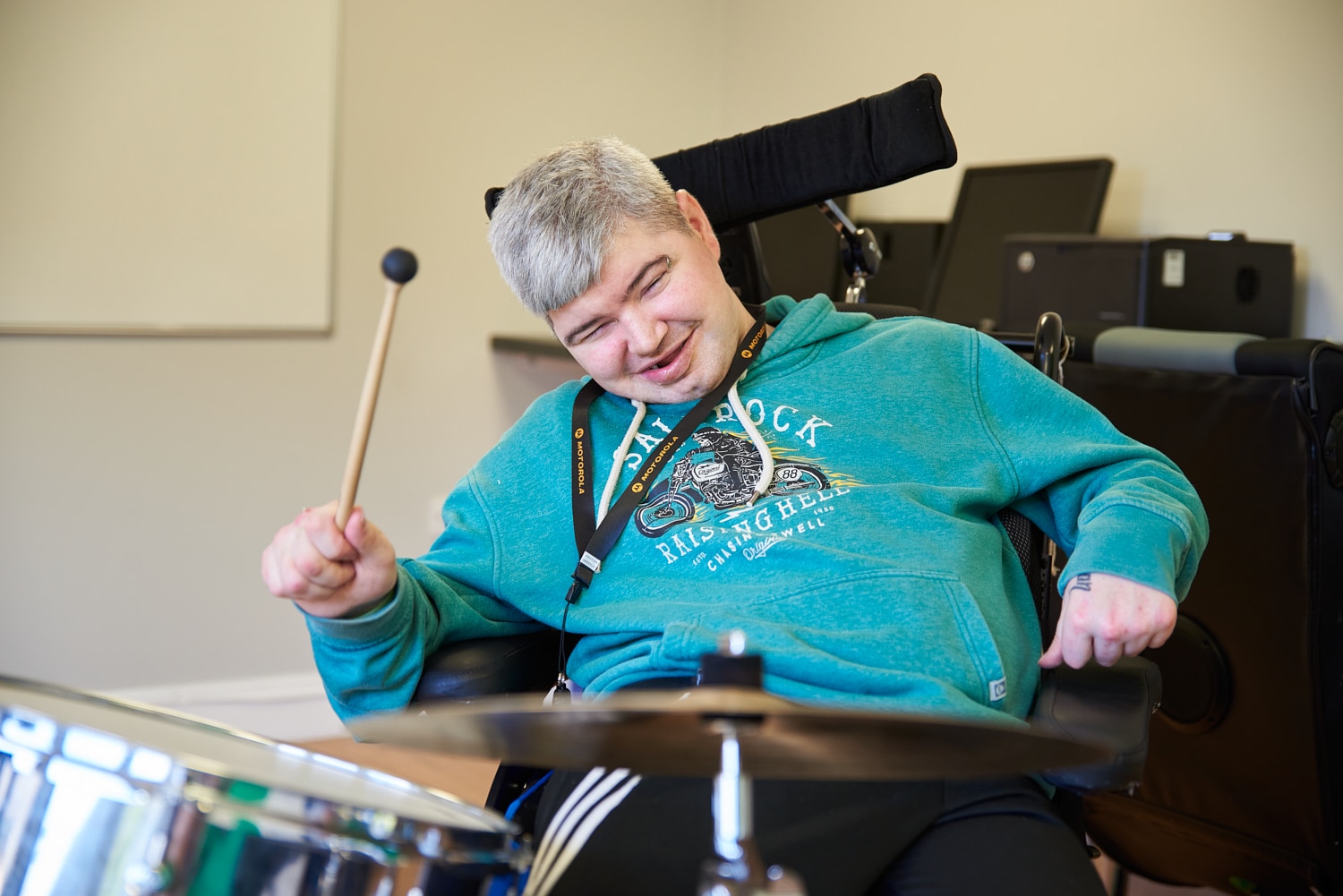
“Music therapy offers far more than an ‘activity’ within Horizon Healthcare Homes… The results can reduce distress, improve engagement and support positive behaviour strategies. This contributes to safer services, improved outcomes and clearer evidence of impact within quality assurance frameworks.
Beyond clinical outcomes, music therapy fosters joy, shared experience and belonging.”
Russell Leese, Director and CEO, Horizon Healthcare Homes
Click here to read the testimony in full.


How does music therapy support care environments?
We strive to deliver consistent, high-quality music therapy across residential, nursing and community settings. Through partnership working and staff training, music therapy principles can be embedded into everyday routines, extending impact far beyond the session.
Flexible models, including 1:1 therapy, small groups, family sessions and open community groups ensure provision is socially supportive while also closely attending to each individual where it is needed most. A dedicated music therapist strengthens both individual care and the wider culture of an organisation by:
- Reducing reliance on crisis interventions and medication (where appropriate)
- Reducing distress, enabling safer staffing ratios and, in some contexts, safer transition from 2:1 to 1:1 support
- Building stronger relationships between residents, families and staff
- Supporting greater staff confidence, morale and retention
- Improving atmosphere, calm and safety across the setting
- Developing staff skills through modelling relational, person-centred practice and training
Music therapy aligns closely with CQC priorities across adult social care, where inspection frameworks emphasise dignity, respect, responsiveness and person-centred practice. It enables positive experiences and measurable outcomes by:
- Tailoring sessions to individuals’ preferences, identity and communication styles
- Recognising strengths and upholding dignity, rather than focusing solely on diagnosis
- Responding flexibly to need, creating meaningful, reciprocal and joyful experiences
- Supporting reflective, skilled practice within teams
- Providing outcome-focused reporting that balances qualitative depth with clear quantitative data
At Nordoff and Robbins, we’re committed to compassionate, person-centred provision aligned with contemporary regulatory priorities.
“For many of the people we support, music becomes not just a form of therapy, but a more joyful pathway to self-discovery and connection.”
Service Manager, Cranmer Court, Horizon Healthcare Homes
Our impact – reaching those who need us most
In 2025, our Nordoff and Robbins music therapy services reached people right across the UK.
48,000
More than 48,000 music therapy sessions were delivered by over 100 highly trained music therapists.
16,000
Nearly 16,000 people took part in music therapy sessions.

300
We worked with over 300 partnership organisations. These included supported living services, care homes, hospitals and community providers.
What do our partner organisations say about our music therapy services?
As part of our commitment to quality assurance, we evaluate our work nationally. Of those surveyed:
- 93% said music therapy improved quality of life
- 92% reported improved communication and relationships
- 97% saw a positive organisational impact
- 91% would recommend our services
Meet Janet, one of our music therapy clients
Music therapy gave Janet a space to be heard. Read more about her experience of music therapy and how it helped her gain in confidence.
Janet lives in supported housing and values her independence. When she first joined music therapy, she chose familiar instruments and stayed on the edge of the group, observing and playing in ways that felt safe.
The music therapist met Janet there, listening closely to her, matching her tempo and shaping the music around her responses. Through gentle musical turn-taking and shared, playful call-and-response, the therapist created a space where Janet could lead as well as follow. The music provided structure without pressure, and predictability without limitation.
Over time, Janet began to explore new sounds and sustain shared musical moments for longer. Her voice, once used briefly, became more expressive within the safety of the shared music. Laughter and mutual recognition grew naturally from these exchanges.
Staff noticed that the confidence and comfort Janet experienced in music were beginning to appear in other parts of her day. There were more moments of shared attention, greater ease in joining activities and more visible enjoyment in being alongside others on her own terms.
Music therapy did not try to change Janet. It offered shared creativity and connection, celebrating Janet’s strengths and opening more opportunities for her to take part in daily life in ways that felt comfortable and authentic to her.
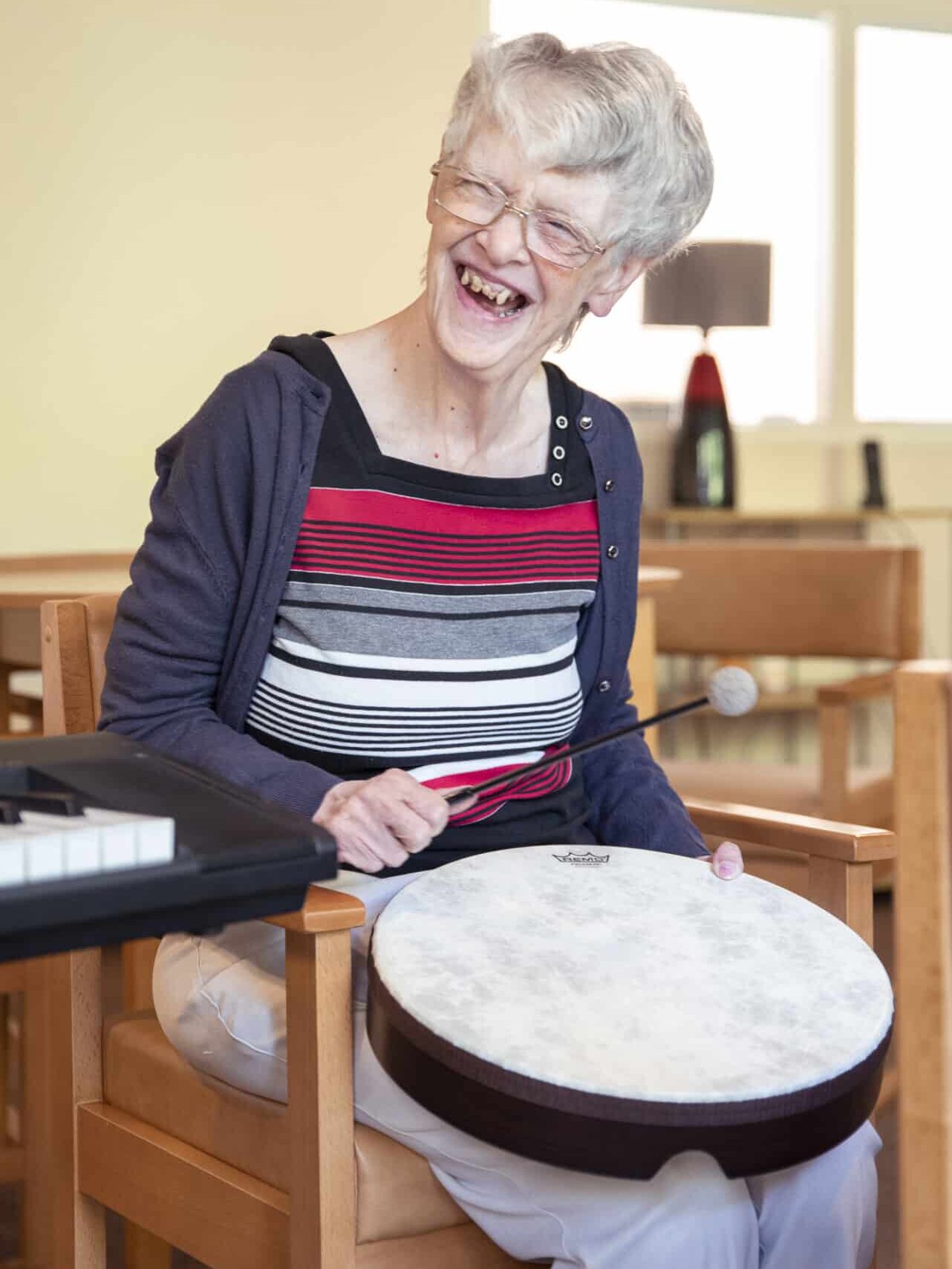
“Janet enjoys musical, playful, turn-taking games which often end with much laughter. At the start of the sessions, she might sing the last word of a phrase in a low single tone. As her confidence has grown, she is slowly starting to use her voice more creatively and enjoys using her voice to make different playful sounds.”
Mary, Janet’s Nordoff and Robbins music therapist

Testimonial from Horizon Healthcare Homes
Russell Leese, Director and CEO, Horizon Healthcare Homes said the following about the work Nordoff and Robbins music therapists do in collaboration with residents at Horizon Healthcare Homes.
“Music therapy offers far more than an “activity” within Horizon Healthcare Homes – it is a clinically grounded, person-centred intervention that directly supports our organisational values and regulatory responsibilities.
As a Director of Horizon Healthcare Homes, my priorities include delivering high-quality, person-centred care, ensuring compliance with standards set by the Care Quality Commission (CQC), supporting staff development, and creating environments where people feel valued, safe and heard. Music therapy contributes meaningfully across each of these domains.
Music therapy places the individual’s communication style, preferences and emotional world at the centre of practice. For people with limited verbal communication, music provides an accessible medium for expression, choice-making and relational connection. This directly aligns with CQC expectations around responsive care and tailoring support to individual needs, strengths and aspirations.
Through improvisation, shared music-making and sensory exploration, we observe the people we support being empowered to lead interactions at their own pace. Their musical responses are treated as meaningful communication. This reinforces dignity, validates identity, and demonstrates respect for autonomy. I have observed some of the most amazing examples of intensive interaction in a career supporting people with learning disabilities spanning thirty years or so.
The results can reduce distress, improve engagement and support positive behaviour strategies. This contributes to safer services, improved outcomes and clearer evidence of impact within quality assurance frameworks.
Beyond clinical outcomes, music therapy fosters joy, shared experience and belonging. Again, we see this on a frequent basis as with the example in the video of Ellie and Michael.”
Click or tap on the video to watch Ellie and her music therapist Michael improvise together during a music therapy session. Or read more about Ellie’s story here.