Skip to content
London Carols 2026 tickets on sale now! Secure yours today and help transform lives through music therapy. Read more

Master of Music Therapy (MMT)

Education and training

Master of Music Therapy (MMT)

Our Master of Music Therapy (MMT) is a two-year, masters-level training programme validated by Goldsmiths, University of London. It’s one of a small number of Health and Care Professions Council (HCPC) approved qualifications in the UK – meaning graduates can register as Music Therapists, a legal requirement to practise in the profession.

The course is rooted in the Nordoff Robbins approach, where practical, collaborative music-making is at the centre of everything we teach.

  • Qualification: Master of Music Therapy (MMT)
  • Accreditation: Health and Care Professions Council (HCPC) approved. This is a legal requirement to work as a Music Therapist)
  • Validated by: Goldsmiths, University of London
  • Duration: Two years
  • Training bases: London, Manchester, Newcastle
  • Study pattern: Two days/week at your base, plus placement and private study
  • Cost: £10,000 total for the two years, to be paid in five instalments
  • Entry requirements: Ability to work academically at Masters level; some experience of working with people who might come to music therapy; a good ear; being musically imaginative; able to provide another person with a real sense of musical companionship. You don’t need to be classically trained or able to read musical notation.
  • Next intakes: September 2027 for Manchester and Newcastle. Applications close end of January 2027. September 2028 will be the next intake for London.
  • Interested? We’re hosting several open evenings this autumn in Manchester, Newcastle and online. Come along, chat to course tutors, and explore whether the MMT is the right fit for you.
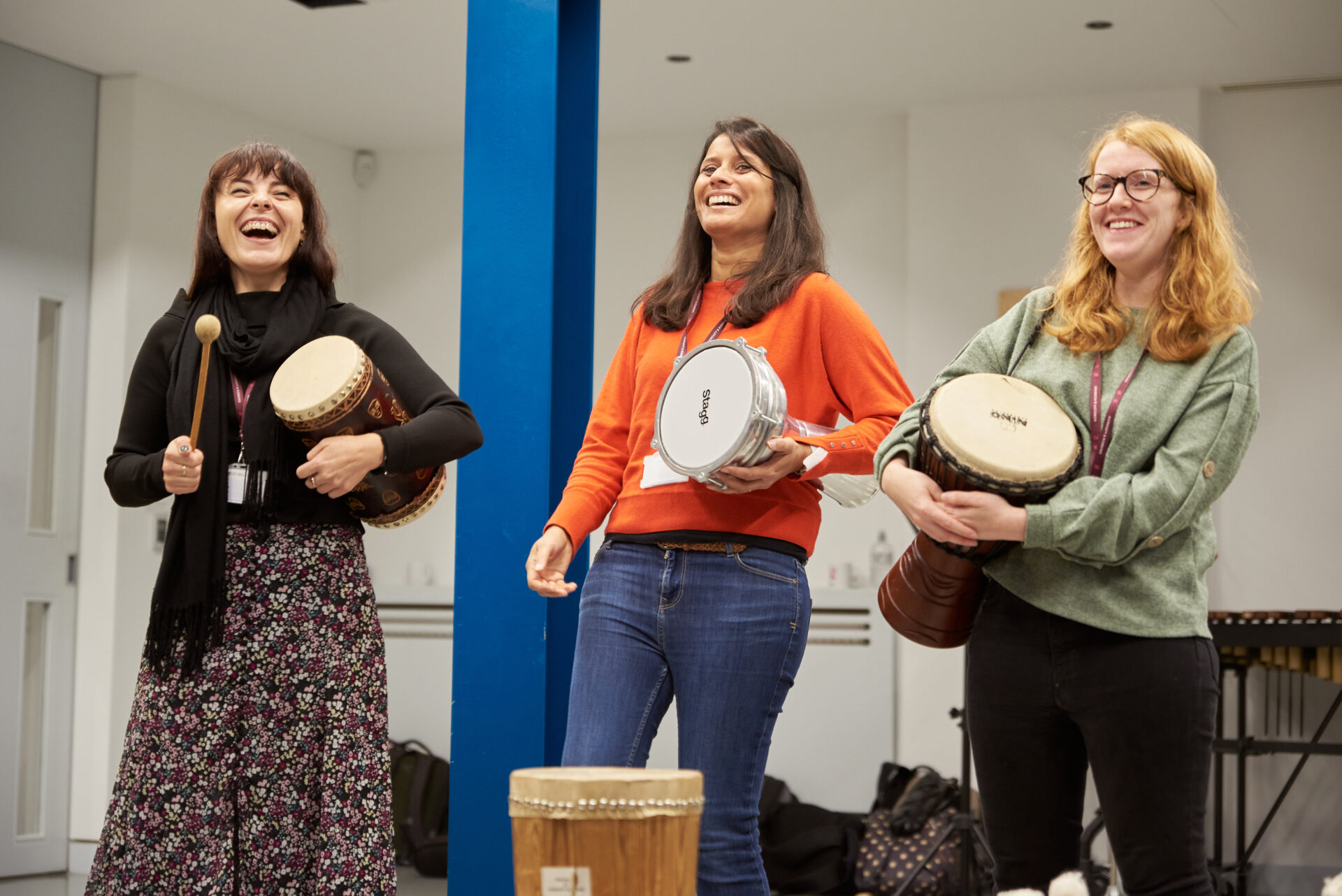
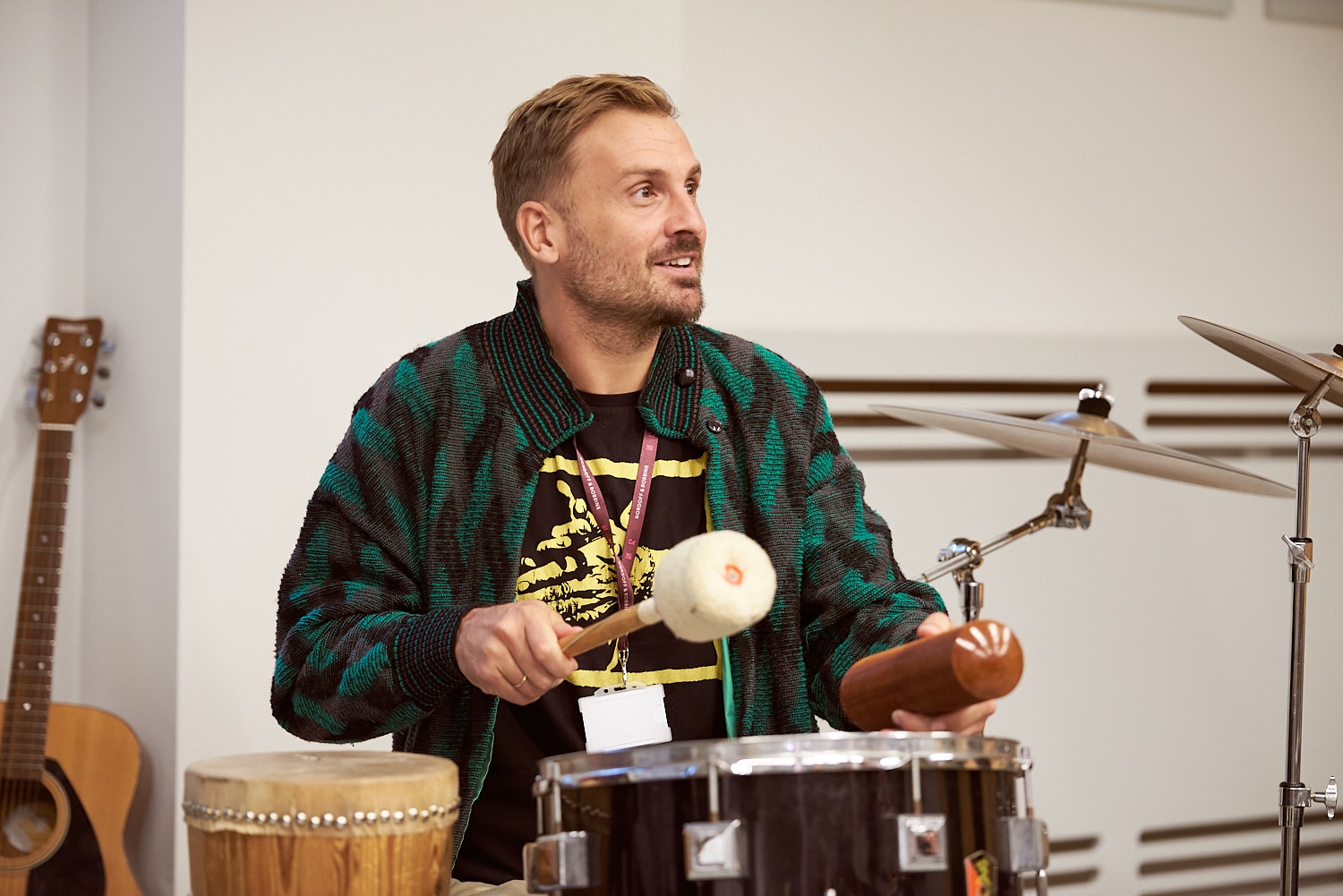
A Master of Music Therapy (MMT) student makes music on the drums at the Nordoff and Robbins London Centre.

What does the Nordoff and Robbins Master of Music Therapy (MMT) course involve?

The MMT treats music therapy as both a practice (something you learn to do) and a discipline (something you learn to think critically about). You’ll explore complex relationships  between music, health and society, and develop your ability to notice what’s happening in the moment during a musical interaction, and why that matters to the person you’re working with.

“If we aren’t informed by a longing for social change within our music making, then what are we working for?” –  Oli, Music Therapist

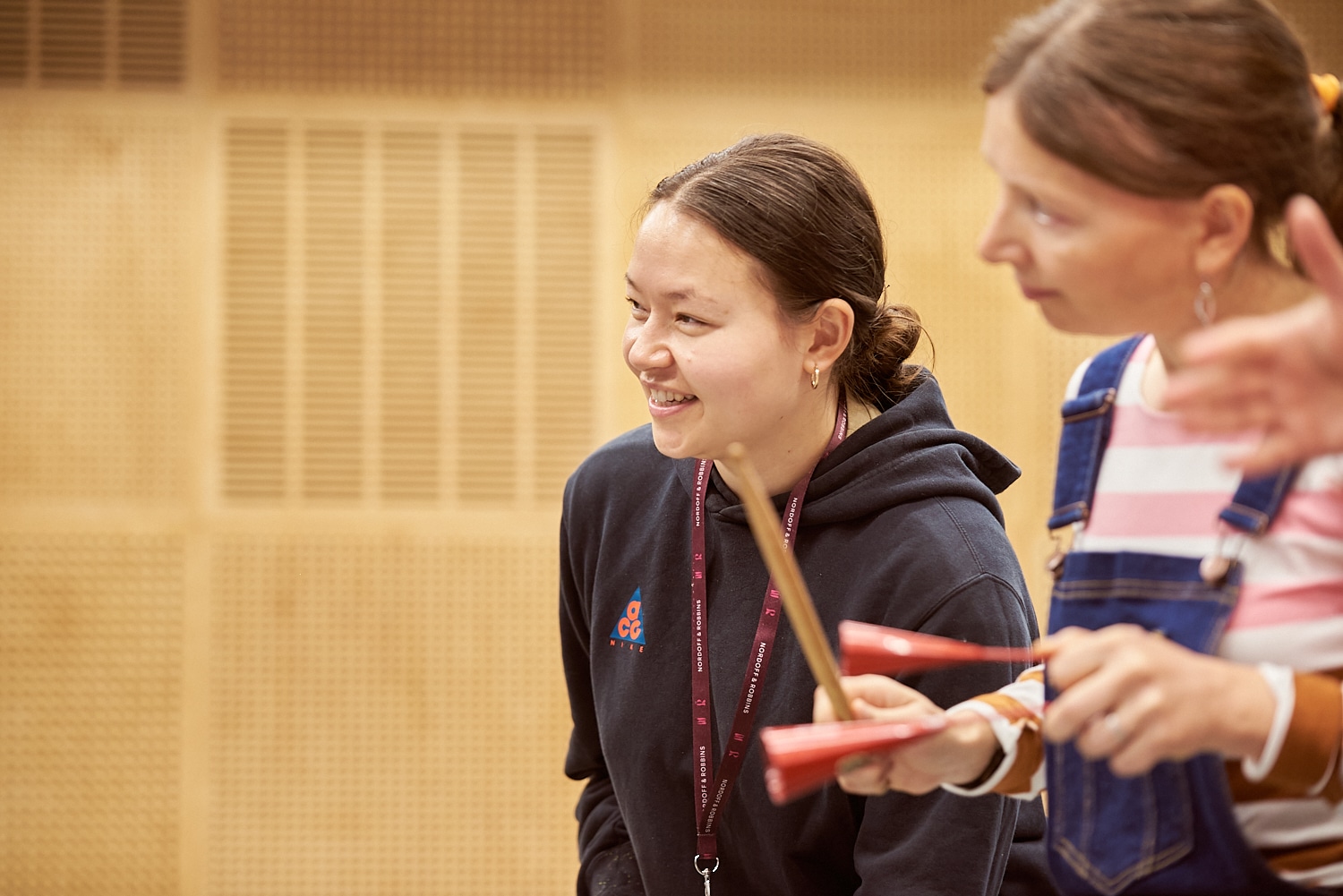
Master of Music Therapy (MMT) students make music together at the Nordoff and Robbins London Centre

Who is the Master of Music Therapy course for?

You don’t need to be classically trained, and you don’t need to read musical notation to become a Music Therapist. We’re looking for people with:

  • Some experience of working with people who might come to music therapy, such as people living with dementia, autistic children, adults with learning difficulties
  • A good ear and musical imagination
  • The ability to offer genuine musical companionship
  • Ability to work academically at masters level

We welcome people from a wide range of musical backgrounds onto the MMT programme and see musical diversity in our cohorts as a source of strength.

“The MMT training programme has been the best educational experience of my life.” – Viv, Music Therapist

Want the full details?

For a general overview of the MMT course, including the Nordoff Robbins approach, how we teach, course content and who we’re looking for. (9 page document).

For detailed information about the MMT course, including entry requirements, placement, tuition fees and other costs. (45 page document).

Keep reading for information about what happens after you qualify, answers to frequently asked questions, as well as information on how to apply.

What happens after I qualify as a Music Therapist?

The Nordoff and Robbins Graduate Employment Scheme (GES), which offers new MMT graduates an opportunity to take up a paid role within Nordoff and Robbins, is currently not offering any new places.

However, newly qualified graduates can access the British Association for Music Therapy’s (BAMT’s) Newly Qualified Music Therapist development programme. This is a free, two-year scheme, with group mentoring offered throuhout by an experienced Music Therapist, in addition to regular access to bespoke online Continuing Professional Development (CPD) sessions.

Click below to find out more on BAMT’s website.
Find out more

Frequently Asked Questions

We have three teaching bases, in London, Manchester and Newcastle. Students are expected to attend for two consecutive days each week. To help those who don’t live close to a base, we try to organise the timetable to make it feasible to travel on the first day and return at the end of the second.

Yes. Our primary concern is that you should be a well-rounded musician with a real capacity for communication. You don’t have to be an experienced improviser, but we do want to see evidence of your flexibility, responsiveness and generosity as a musician. You will also need functional harmony skills (on any instrument), so that you can accompany someone singing a song, for example.

You don’t need to be able to read music or to have done any traditional music examinations or ‘grades’ to thrive on this programme and then to do great work as a music therapist. We don’t see distinction at Grade 8 as necessarily equipping you with the kind of skills that will enable you to do great musical work with people. Instead, we are looking for people who have a good ear and strong musical competences, in particular a clear ability to be musically flexible, responsive, and therefore companionable for people for whom companionship is often particularly hard to achieve or experience. We also want you to be musically imaginative so that you can, where appropriate, lead people into new and meaningful musical experiences. This means not being restricted to just one way of playing or thinking musically, but rather being able to be changed by other people’s musics and by new situations. In particular, you need to be able to hear the potential music in all sorts of apparently non-musical situations and to play a part in enabling this music to be experienced. However, we are often asked for a benchmark by prospective students who are used to thinking in terms of grades. In response to this we usually say that your primary instrument should be at what might be considered Grade 8 or above. If this isn’t a harmony instrument, you will also need to demonstrate harmony skills that could be considered at Grade 6 or above. As explained above though, we care much more about your musicianship, your musical flexibility and your musical imagination than about any grade exam results you may have achieved. That’s why we invite shortlisted applicants to play and sing with us (rather than just to us) at audition.

It is £10,000 for the full two-year training programme (paid in 5 instalments: September, January, May, September, January). Unfortunately, our students cannot access the postgraduate loan offered by Student Finance England, but this is something we are continuing to work on. We try to offer various bursary opportunities throughout the training programme, but these may vary year to year. If you have any questions about funding, please do get in touch with us at [email protected].

There are additional costs to be aware of whilst undertaking the MMT training – please see the question below for more information.

No. Some of our students have a music degree or have been to music college, but we are also keen to recruit students whose musical training is from a different tradition or is less formalised.

No, but you do need a good ear and the ability to pick up musical ideas quickly and effectively. We don’t mind what kind of terminology you use, but you do need to be able to communicate with precision about what you’re doing and what you’re experiencing musically.

We would encourage you to test your personal capacity for this kind of work by gaining some professional, voluntary or familial experience of working with people who have particular needs, as this can be both physically and emotionally demanding.

Absolutely not. We positively welcome applications from people with life experience. Many people apply to the programme having accrued considerable professional experience in related areas, including teaching, nursing and community music.

We actively seek to recruit diverse cohorts. Ultimately, we would like our student cohorts to reflect the diversity of the people we serve. That isn’t yet the case, but we are working towards it.

No. Our foundation module teaches you the fundamentals of the Nordoff and Robbins approach, and you won’t have got this from other training.

No, but we have designed the programme to be as manageable as possible for people who need to continue working while training. You will be required to spend two days a week at the teaching base and one on placement. You will also have the equivalent of a day’s private study to do each week.

This isn’t necessarily an obstacle, but you will need to demonstrate to us that you’re capable of working at masters level. If you would like some guidance on how best to do this, please contact us on [email protected].

We don’t expect you to have read everything about music therapy, but you will need to show us that your wish to train is an informed one. When we interview you, we will explore your reasons for applying and what you have learned from your reading.

Because of the MMT’s international reputation, the quality of our graduates, and their success in gaining and generating work after training, we do get a lot of applications each year. Don’t let this deter you, though: if you have the right musical skills and personal qualities, we want you to apply.

Due to UK visa restrictions and the effects of Brexit, we can only accept applications from people who already have the right to live and study in the UK. It is not possible to apply for a Tier 4 UK student visa in order to undertake the MMT programme.

We hold regular open events in London, Newcastle and Manchester, as well as online, where you can meet staff and students and get a feel for what it would be like to be an MMT student. Check our website or contact us at [email protected] to find out more about upcoming open days. You can also email us at the above address or call 020 7267 4496 if you have any other questions about the MMT.

Interested in training with us? We’d love to hear from you. Here’s how to apply for the MMT:

1. Attend an open evening

Join us at one of our open evenings (in-person or online) where you’ll meet course tutors and get a feel for the programme. In-person and online open evenings are currently running for our Manchester and Newcastle September 2027 intake.

2. Read our detailed guidance on how to apply

As part of your application you’ll need to record yourself playing and singing and submit this online. You’ll also need to complete a medical report. Click on the link below to read detailed guidance on what needs to go into your application so that you can gather the relevant information before you begin the online form.

3. Start your application!

To apply, you’ll need to fill in an online form on our website. Once you begin the application, you’ll have 30 days to complete it. Please note that there are 14 steps to the online form, so leave yourself plenty of time in advance of the deadline to complete your application. Our closing date for applications for the Manchester and Newcastle September 2027 intake is Friday 29 January 2027.

We’re here to help!

As a very small administrative team, we receive a high number of enquiries and want to make sure we can respond as quickly and helpfully as possible. Before contacting us, we therefore kindly ask that you attend an open evening, read the prospectus and work through the detailed application guidance, as these cover many of the questions applicants commonly have.

If you’ve checked these resources and need some support, we’d be very happy to hear from you.