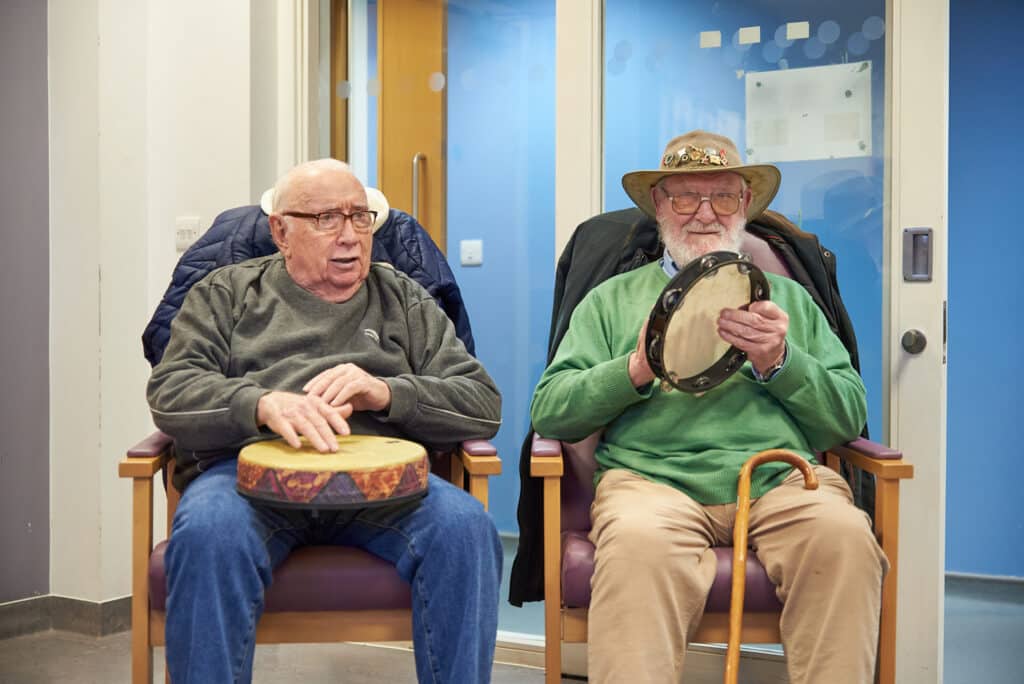
Dagenham Memory Service
Dagenham Memory Service is a memory clinic and care home within the North East London NHS Foundation Trust (NELFT).
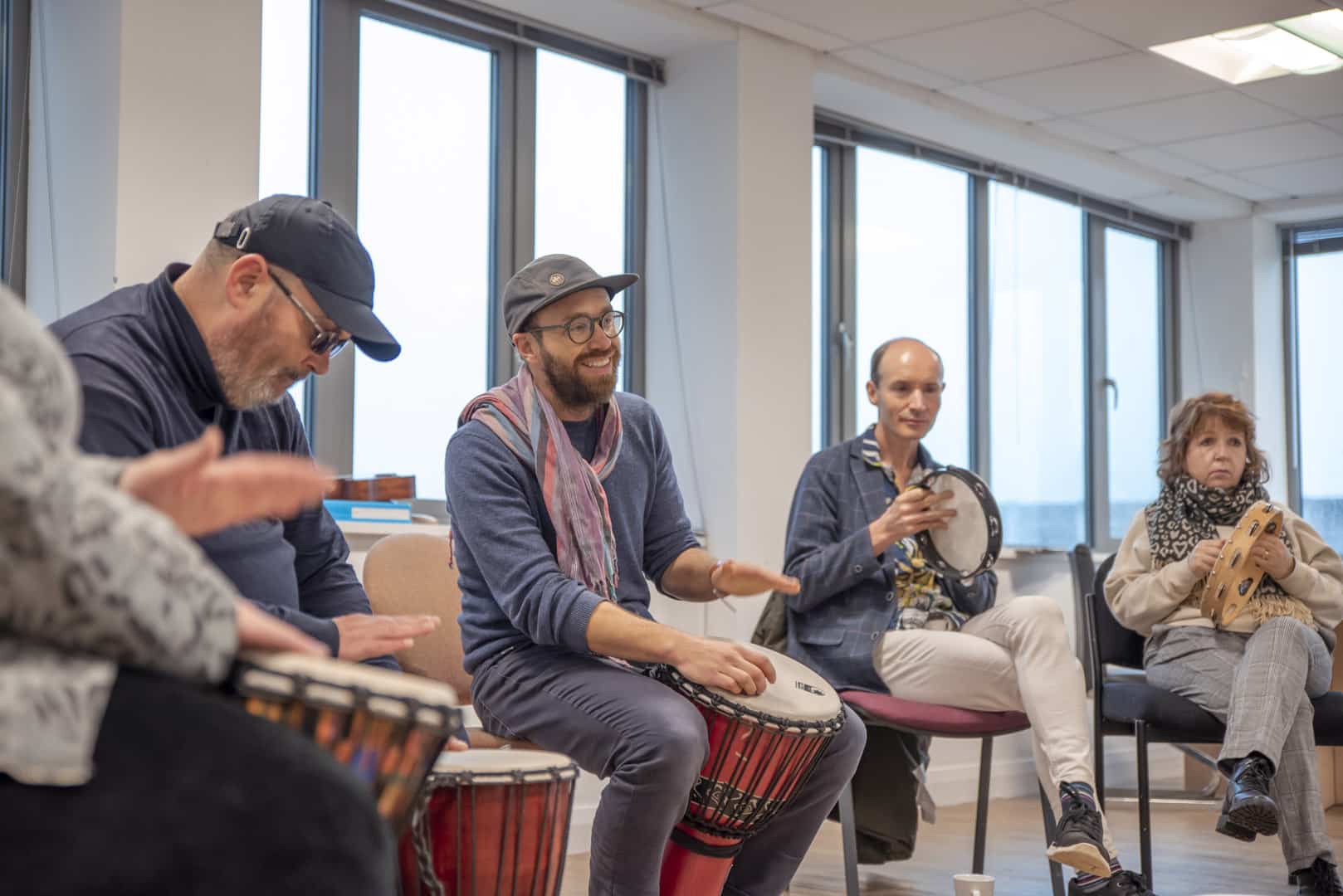
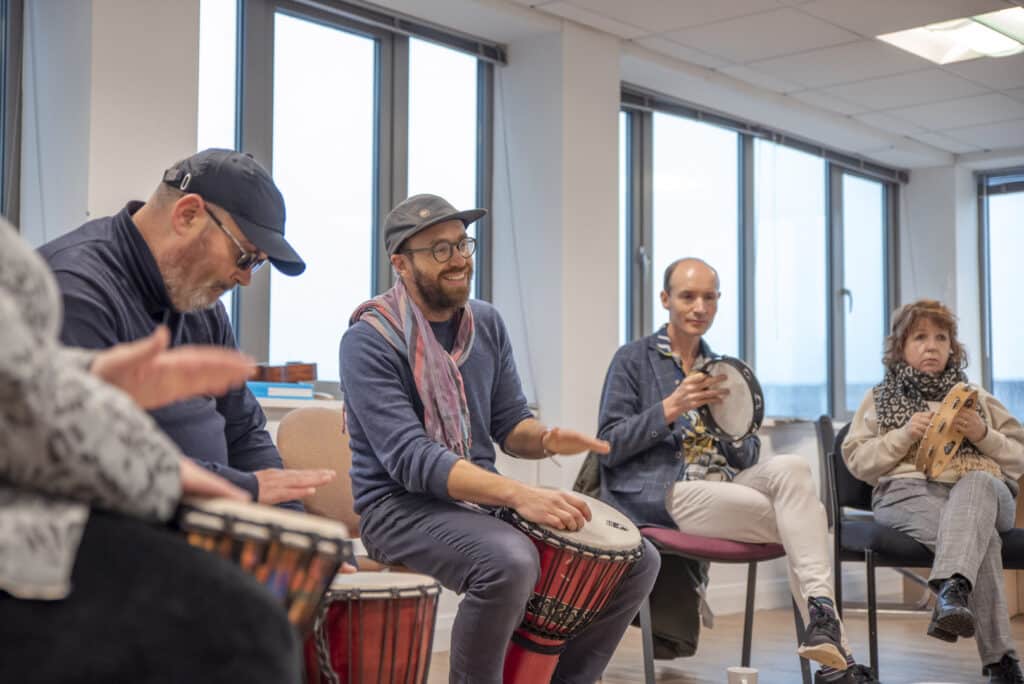
We’re delighted to be able to offer weekly group music therapy sessions in your community. Music therapy provides space for people to connect, express themselves, and explore music together.
Our group offer* is as follows:
Cost: £90 per group session, for a minimum of 12 weeks. Annual contracts available.
Additional one-to-one sessions are available at £60 per session. These include reports and relevant onward recommendations from your music therapist.
*Please note that this offer is currently only available in Salford.
Dagenham Memory Service is a memory clinic and care home within the North East London NHS Foundation Trust (NELFT).
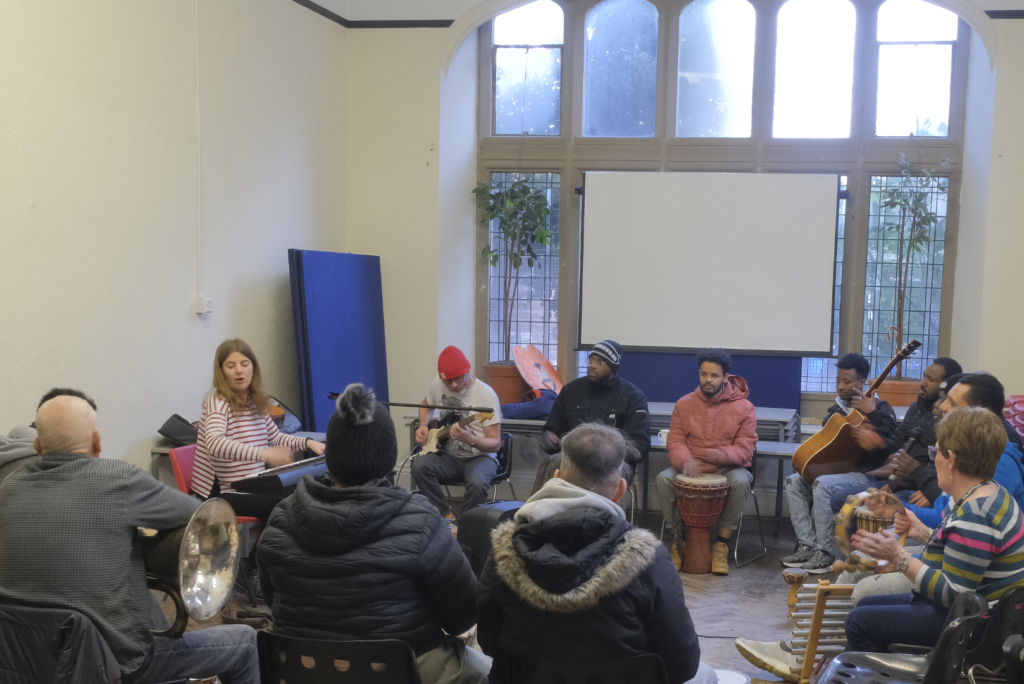
After fleeing his home country, Samir was completely alone when he arrived in the UK. Music therapy improved his mental health, and helped him to be part of the local music community. Read his story today.
ReCoCo is an independent, peer-led mental health charity. It is commissioned by the NHS and others to deliver groups, courses, activities, engagement work, training and research relating to mental health.
Click on the button below to fill out our simple form and register your interest in group music therapy sessions.
One of our team will then be in touch to discuss your requirements in more detail.
There are lots of ways music therapy can make a meaningful difference. Here are just a few:
Music therapy is a regulated profession, utilising collaborative music-making to help people whose lives have been affected by illness, disability or injury through supporting their psychological, emotional, cognitive, physical, communicative and social needs.
Many musical activities can improve someone’s wellbeing, such as singing in a choir or listening to music. However, our music therapists, who are registered health professionals with the Health and Care Professions Council (HCPC), set therapeutic goals, engage in regular clinical supervision and have continuous professional development to ensure high quality and to maximise benefits for their clients.
At Nordoff and Robbins we take a unique ‘music-centred’ approach to music therapy, where the music therapist’s role is to develop the client’s experience of collaborative participation, opening them up to the many rewards of music making.
We’re the UK’s largest independent music therapy charity, reaching across England, Scotland and Wales. With over 60 years of experience delivering music therapy sessions to some of the most vulnerable people in our society, our purpose is to break through any barriers created from illness, disability or life circumstance with the power of music, creating space for people to express themselves and find connection in society.
We have a threefold mission in the way we carry out our music therapy:
At Nordoff and Robbins, our therapists work with a wide range of people, including those with autism or learning disabilities, those who have experienced trauma, homelessness or struggle with mental health difficulties, and those with neurological conditions or dementia. We use music to engage people in ways that feel safe, motivating, and meaningful. By focusing on each individual’s strengths and needs, music therapy supports outcomes such as improved mental and emotional wellbeing, reduction in anxiety, increased communication, motivation, focus, and experience of forming stronger social connections.
Click on the button below to find out more about our work and who we support.