Alfie’s story
One in 100 children in the UK are diagnosed with autism.
Autism can affect how people communicate and interact with others.
Autistic children might find it difficult to make friends or keep up with their education, which can make them feel stressed, anxious or frustrated. Teachers and parents may see them behave in ways that are challenging for others.
Around 83% of people have struggled to get support for their autistic family member. This means that children with autism may not be getting the help they need to develop skills such as learning and speech.
Music therapy can help unlock these abilities and offer support in developing their communication and social skills, whilst building awareness of themselves and others. Through active music making, we can cultivate self-esteem and confidence.
Music therapy has helped Alfie find ways to work collectively with others
Alfie is nine years old and is autistic. When Alfie moved to a new school, he found it hard to interact with other pupils or do tasks he didn’t enjoy. He struggled to cope, and his behaviour worried his teachers. Then, he started music therapy with his class, which he really enjoyed, before moving to one-to-one sessions with Charlie.
Charlie and Alfie sang Alfie’s favourite songs by One Direction, Harry Styles and the Arctic Monkeys together, with Alfie taking solos on the drum kit or guitar. Alfie would often smile all the way through and say how good the session was. On his bad days, he didn’t want Charlie to make music with him. But by showing Alfie that she was actively listening and enjoying his music – tapping her foot, singing quietly – eventually he would let Charlie join in. He learned to be flexible and follow someone else’s lead.
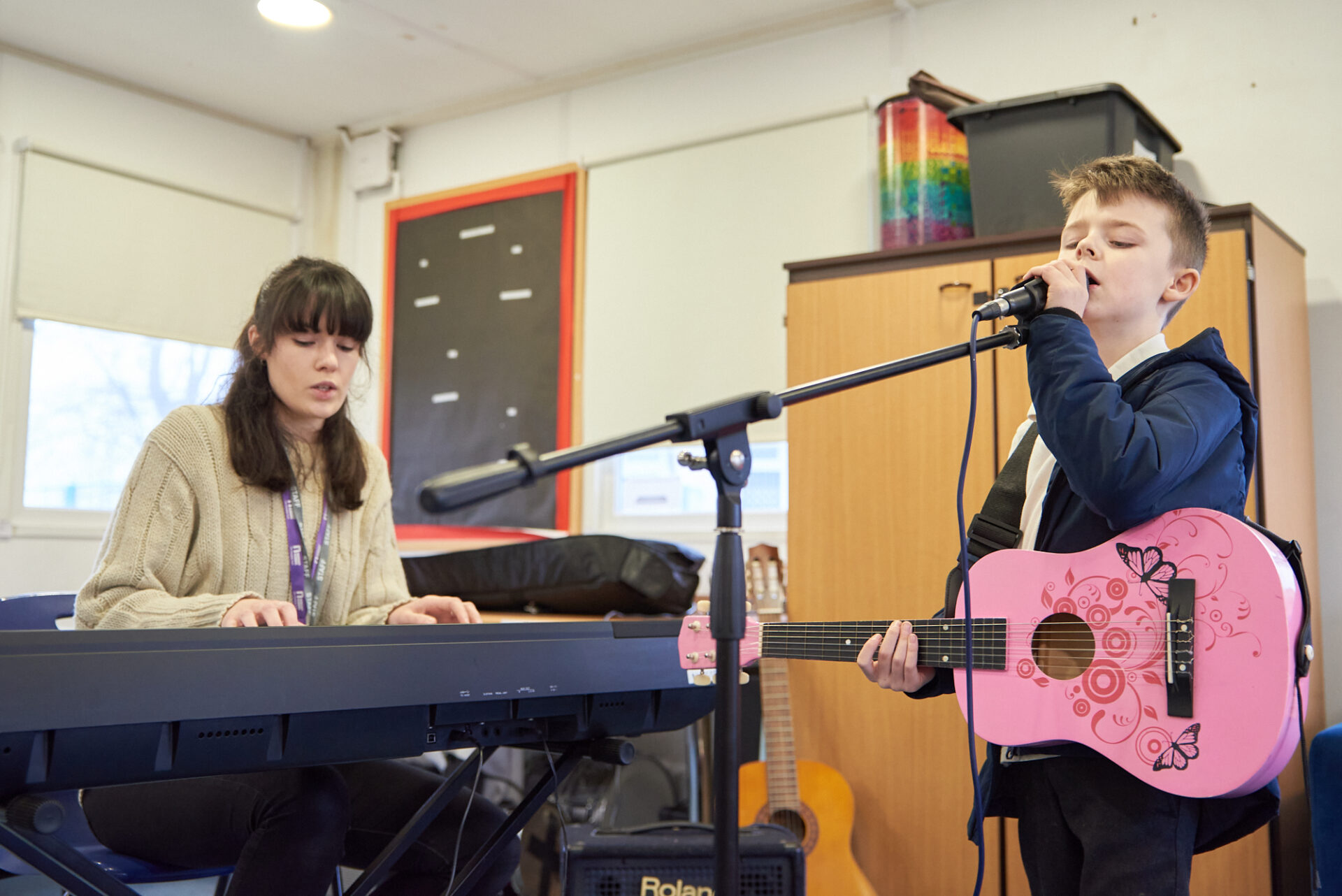
As someone who found it difficult to follow the lead of others, particularly in situations where he was uncomfortable, being able to experience flexibility of leading and following in music therapy feels significant for Alfie.
Charlie, Alfie’s music therapist
Stories

Romano’s story
At age six, Romano began music therapy. Through music, Romano was given the chance to express himself, opening up a world of possibility.
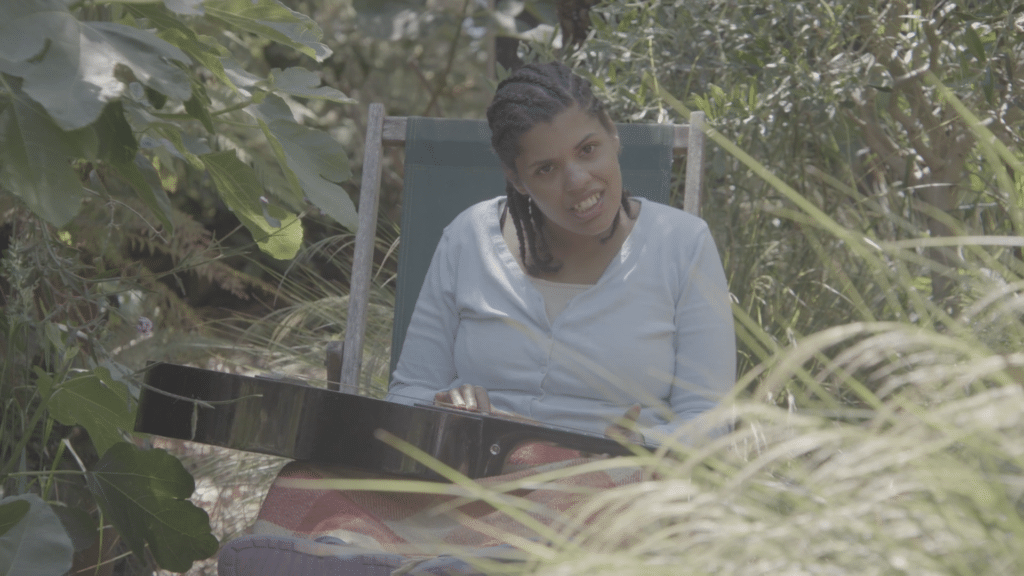
Inez’s story
When Inez started having music therapy sessions she was mesmerised from the start. “Her eyes light up and she smiles,” says Inez’s mum, Julia.