Stephen’s story
Music gives Stephen a space to connect, and a rare opportunity to take the lead
When Stephen was a child, he was a refugee from Poland during the Second World War. This trauma impacted his life, making it difficult for him to express his emotions and to let others know when he was struggling. Stephen went on to become a psychologist, lecturing at universities and writing academic articles. Today, he’s living with advanced dementia in a care home in North London.
Living with dementia affects how Stephen engages with people and the world around him. Speech and conversation have become difficult for him, which can make it hard for him to interact with staff, other residents, his family and other visitors. He often cries when he is emotional but is unable to verbally express how he’s feeling.
Music, particularly classical music, has been important to Stephen throughout his life. He began sessions with music therapist Kate and he was engaged from the beginning. Music seems to offer Stephen a way to interact that’s more direct and less stressful than conversation. Through music, he can be fully present with another person as they share an experience together. He reacts physically, by using lots of gestures, during his sessions with Kate.
In music therapy sessions, Stephen exercises his agency. Often, he begins by gesturing to the music played by Kate, his movements clearly related to the music. As Stephen changes the speed of his gestures, Kate adapts the music to match, as though he’s conducting. He seems to be aware of his impact, as the smallest changes he makes with his hands impact the music.
And sessions provide Stephen with a space to connect. He interacts closely with music therapist Kate, and that helps them to create a sense of shared companionship.
Stories

Tim’s story
Music therapy has allowed Tim, an accomplished musician coming to terms with a brain injury and amputated arm, to rediscover a sense of purpose and identity.

Alfie’s story
Music therapy has helped nine-year-old Alfie, who is autistic, to find ways to work collectively with others.
Ali’s story
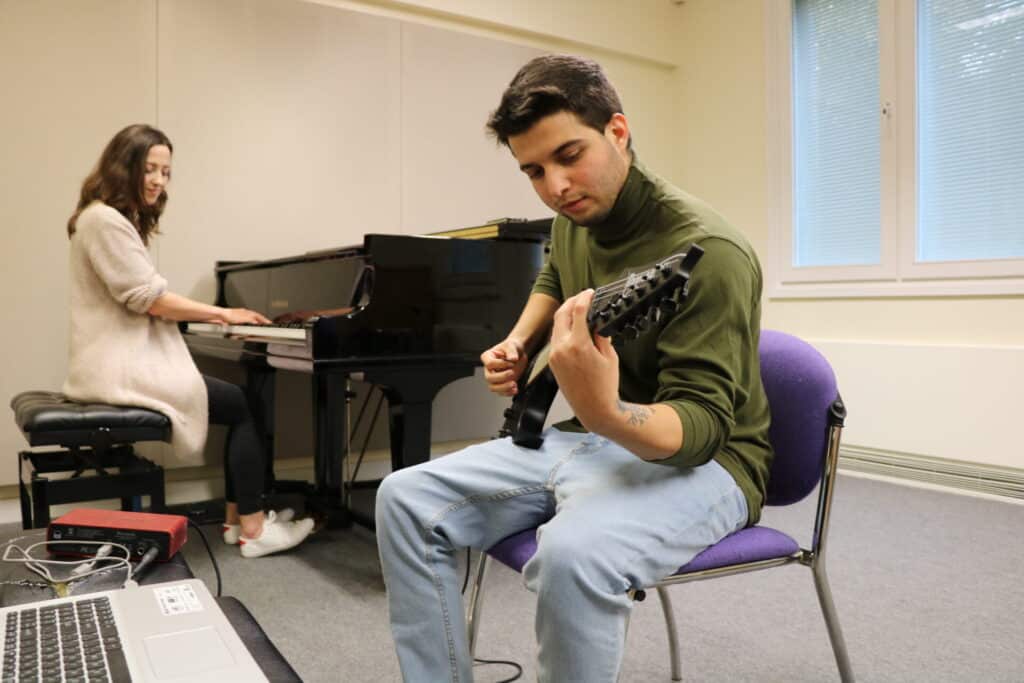
Music therapy helped Ali, an Iranian refugee, cope with the anxiety of his asylum application, make meaningful connections and rebuild his focus and confidence.