What does a music therapist do in a day? A day in the life of music therapist Loren
Have you ever wondered what a music therapist does in a day? We work with a diverse range of people, so every day looks completely different for each of our music therapists. We spoke to Loren who works at a Special Educational Needs (SEN) school near Newcastle upon Tyne. She shares what a typical day looks like in our blog below (plus a bonus video!).
Arriving at school
I arrive at school about 8:30am today and sign in. As usual, the corridors are abuzz with students keen to update me on the exciting things they’ve done this week. I make my way over to the school’s new creative arts lodge where music therapy sessions take place. On the way there, I stop to check-in with teaching staff and the interdisciplinary therapy team to confirm the day ahead and ask how students have been. It’s then time to unpack the instruments from the cupboard and set them up. A few of the older students are already in the room, excitedly updating each other on the music they’ve been listening to this week and showing each other new guitar riffs. The bell rings for form time and they head off. Leaving me a few minutes to catch up on emails and look over my case notes from the previous week.
First sessions of the day!
My first session is with a teenage student named Adam, who attends music therapy to explore and understand different feelings, and how to recognise these feelings in others. He’s great with computers and video games and is currently designing his own levels for a game he enjoys. We listen to a song that he finds inspiring and discuss what he likes and doesn’t like about it. We then move to the instruments. He chooses to play the keyboard and asks me to play the djembe. And together, we work to create a song to accompany the videogame level he designed. He wants the music to sound ominous and unsettling, and it takes a few tries for us to get it perfect. After each improvisation, he gives me feedback, and clarifies which emotions he wants the music to portray.
I have a few more sessions before morning break, and I head to the staffroom to grab a cup of coffee, thinking over the sessions from this morning and writing my session notes into our online database.

Late morning session
Before lunch I have a session with Billy and Isaac, who are in the same class. Both of these students find it difficult to socialise with their peers for different reasons. So, they come to music therapy together with their teaching assistant to help with their expression, social skills and confidence. Often, Billy and Isaac choose opposite sides of the room, play different instruments and request different songs. The last few months have been spent trialling different ways to bring them together as a group, to listen to each other and respect their different ideas.
Today, we find a song they both like, and one sings into the microphone whilst the other accompanies on the drum kit. It’s a short five minutes of intense listening before they each return to their respective spaces and ideas. The teaching assistant and I smile at each other in recognition of Billy and Isaac’s achievement. This huge positive step is so encouraging when considering the students future relationships.
Sing and sign lunchtime club
At lunchtime there’s a knock at the door and Amy, the school speech and language therapist, arrives for our sing and sign club. We started the club in September with students in year 10, and now younger students have been invited along too. Each week, the students suggest songs that they like, Amy teaches us the Makaton signs, and we sing and sign along to the piano. Today, the students have chosen ‘Thank you for the music’ by ABBA.
We hope that by teaching older students and buddying them with a younger student, we can encourage friendships and social connections across different classes and year group. It gives the year 10 students a feeling of responsibility and the younger students a role model to look up to, both inside and outside the musical space.
Afternoon sessions and supervision time
I have a few more sessions in the afternoon. In the first session, a year 9 student teaches me a Metallica song on guitar. In the second, a primary school student assigns different feelings to colours before we perform the rainbow song together. She conducts staff and I to play and stop as a band.
It’s then time to pack up all the instruments and sign out. I head to the Nordoff and Robbins centre in Jesmond for supervision. Supervision groups meet monthly – we each bring some work we’re finding challenging, and support each other with different ideas, perceptions or thoughts. It’s a great way to get a second opinion or new perspective, as well as a chance to workshop different scenarios. I arrive early today (I’d like to say this is usually the case!) and so have time to catch up with some colleagues beforehand. With therapists working individually at different organisations, we don’t get to see our colleagues daily. We make the most of the times we get to come together.
Watch Loren’s Day, in the video below
Please note, that names in this article have been changed for confidentiality.
Latest posts
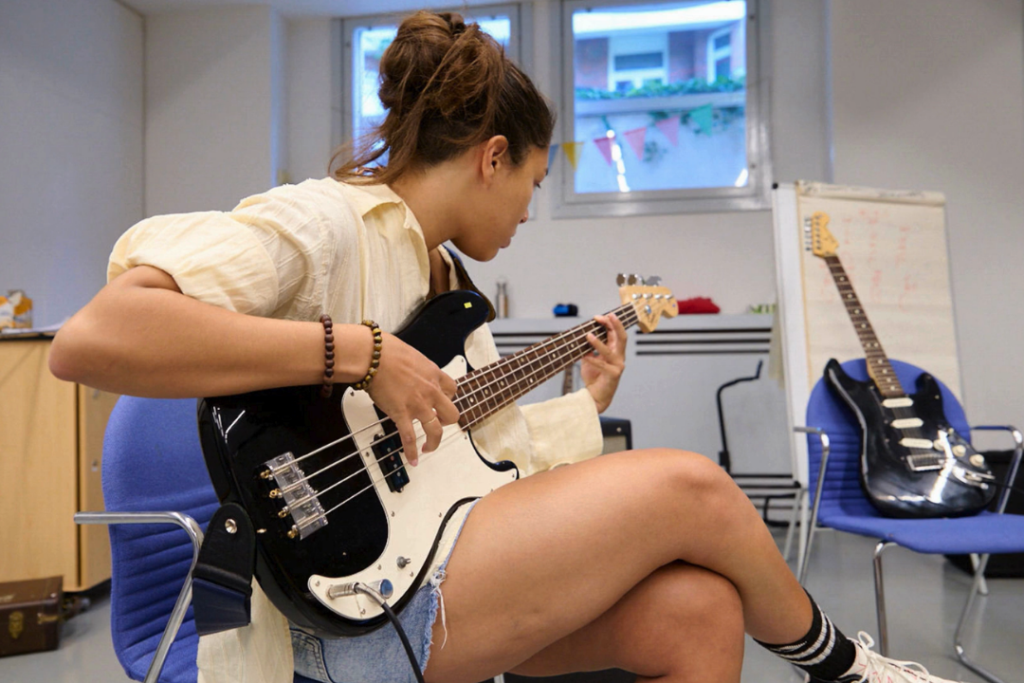
Can social prescribing support mental health?
How can social prescribing support mental health? Rosie shares her experience of music therapy as a form of social prescribing.
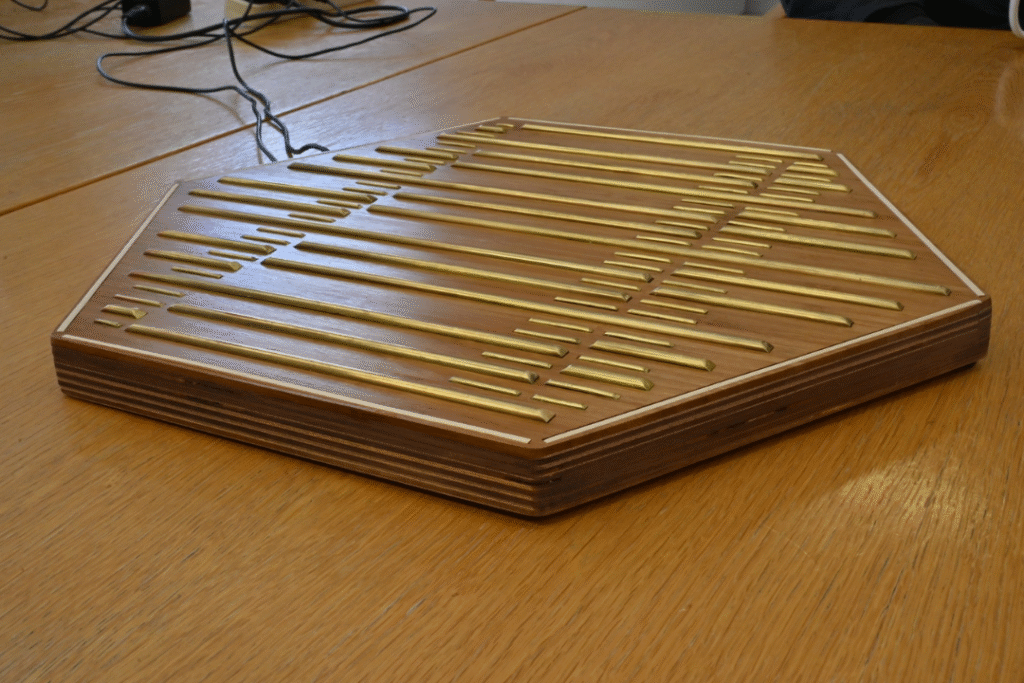
Can technology make music more accessible?
The ‘ReHarp’, a digital instrument designed to support rehabilitation following a stroke or brain injury, is showing how innovation can make music more inclusive, and allow creativity and expression to become a part of recovery.