Jada’s story
Through music, Jada can express herself freely
Jada is sixteen, and has Down Syndrome and is autistic, which affects her physical and mental health. But music brings her a lot of joy, with her parents writing in her music therapy referral form “[she] is most happy when she is singing, using instruments and tapping out beats with her hands by clapping or using furniture.” Her parents noticed how music can help Jada to feel calm, as well as motivate her to try new things. So, they referred her to music therapy.
From the very first session she attended, and within just a few minutes, her smile and happiness was visible.
Kim, Jada’s mum
From her first music therapy session with therapist Hannah, Jada was excited. She started by tentatively tapping a drum and gradually became more animated. She vocalised more and switched between playing the piano and the drum, smiling and laughing throughout.
At the beginning of her sessions, Jada often played music at a very fast pace or started slowly before building up to a loud climax and stopping abruptly. She found it harder to maintain either slow or quiet playing, which made it difficult for her to focus or enjoy the sounds she created. However, over time in her sessions, Jada gradually learned that she could play music slowly or quietly, with intention and purpose. This allowed her to discover the beauty in the sounds she created and enjoy creating music with another person. Gradually, her music became more controlled and deliberate, but this didn’t limit her. Instead, it gave her the freedom to explore her creativity and immerse herself in the music.
We are seeing our daughter starting to thrive in areas of communication, emotional regulation and wellbeing.
Kim, Jada’s mum
Music therapy sessions have helped improve Jada’s confidence to collaborate with others. Her mum, Kim, shared that music has “given Jada a chance to explore her love for music in a safe environment that is able to meet her challenging needs and where she is ‘understood’.” And when Jada left her sessions, her parents noticed an improvement in her mood, which helps with her emotional regulation, concentration and motivation to engage in other things.
Kim also took part in a short course designed to help parents make music with their children at home. The course encouraged parents to listen closely to their child’s music without expectations of what it should sound like. By putting this into practice, Kim noticed that Jada started to create more complex music, with diverse dynamics, rhythms and harmonies. Kim shared that providing Jada with the freedom to express herself entirely has greatly helped her overall wellbeing.
Stories
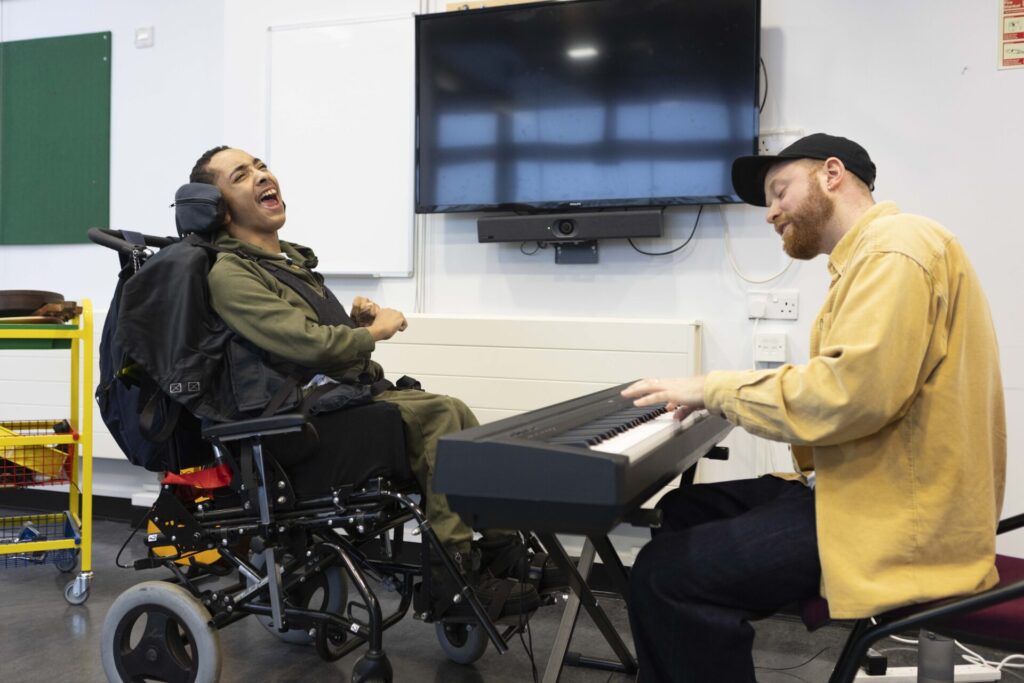
James’ story
James is 14 years old and has cerebral palsy, visual impairment and learning difficulties. For two and a half years, James has been making music at his school in London, with Nordoff and Robbins music therapist Sam.
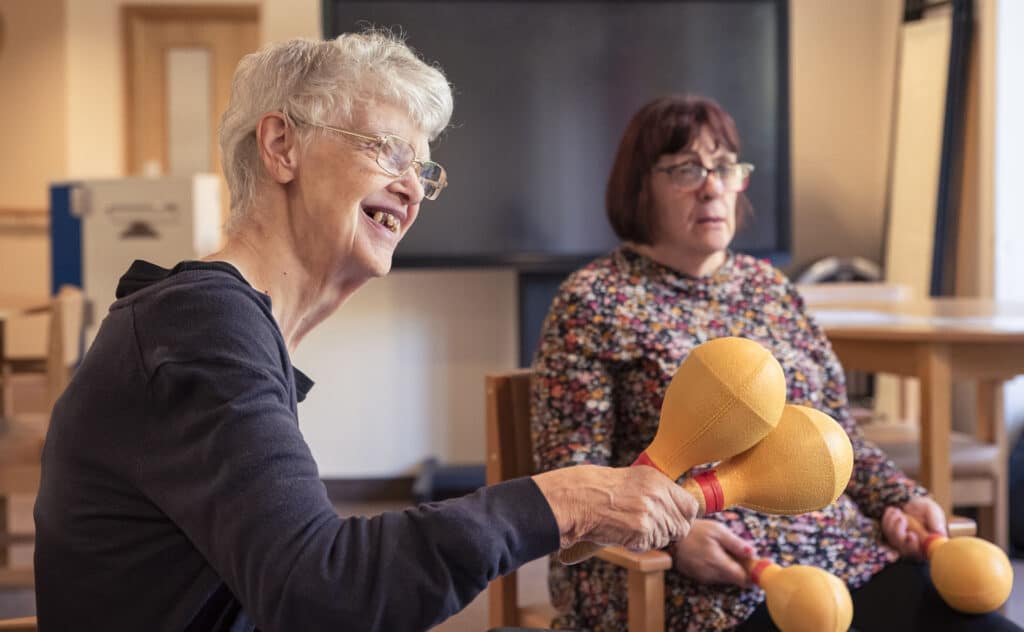
Janet’s story
By bringing the participants closer together, music therapy has also increased Janet’s ability to interact with the people who support her at home.
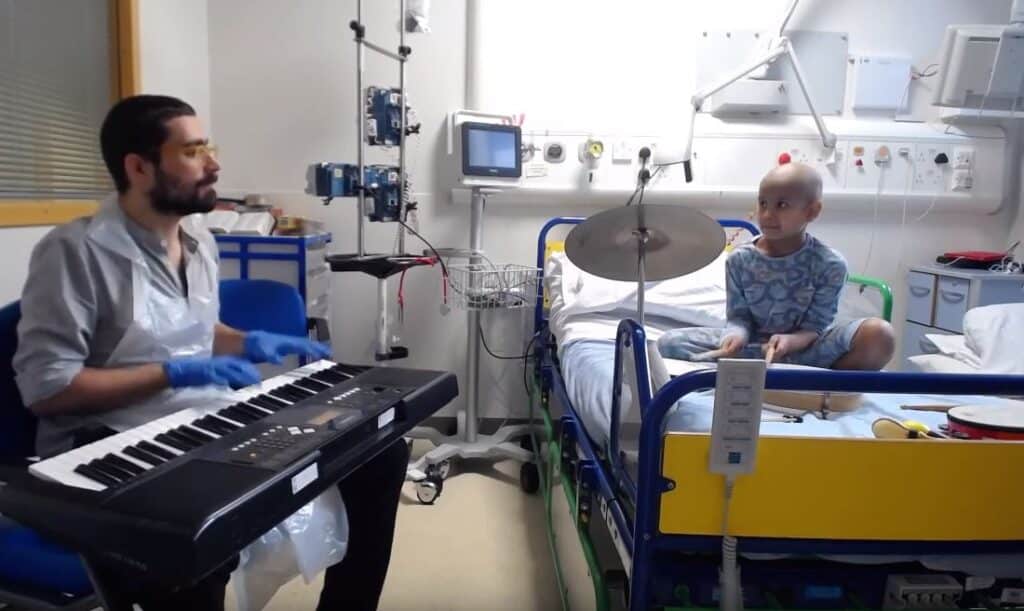
Jonathan’s story
During his painful and exhausting cancer treatment, music therapy helped Jonathan overcome his isolation and find new ways to express himself.