How can music therapy support people living with psychiatric illness in intensive care settings?
Nordoff and Robbins music therapist, Stella Hadjineophytou, shares how music therapy can support people living with psychiatric illness in intensive care settings. Please note all sensitive information has been anonymised. If you are affected by any of the issues in this article, please contact your GP.
What is a psychiatric illness?
Psychiatric illness is often highly stigmatised – largely due to the complex causes and symptoms, and because we still have lots to learn about the human brain.
Family history, trauma, childbirth, and drug use are common catalysts for psychiatric illness, but sometimes it’s part of another condition such as dementia, or the onset can seem completely random. Symptoms can range from elements of depression and anxiety to paranoia (an intense feeling of being observed and mistrust of others) and delusions (believing facts or narratives not founded in reality).
There are hundreds of diagnostic labels for psychiatric illnesses. However, common umbrella diagnoses include Bipolar Affective Disorder, Schizophrenia, and personality disorders. Despite stereotypes, most people living with psychiatric illnesses are of little harm to anyone but themselves, with only a small percentage acting against the law.
What is an intensive psychiatric care setting?
Most people living with psychiatric illness are supported by regular healthcare appointments, medication, and community support. Others may have to spend a short or extended stay in Intensive Psychiatric Care Units (IPCU, sometimes PICU), the most secure and monitored ward within a hospital. People who are admitted to IPCU are typically:
- Experiencing symptoms for the first time and don’t have medication yet
- Have a history of psychiatric illness and have stopped taking their medication, or are in a phase of more intense symptoms
People are generally admitted to IPCU from the community either via detention under the Mental Health Act, through self-admission, from another hospital ward, or from prison. On admission, people are likely to be nursed in their room on two-to-one constant observation and phased into general ward life as treatments take effect.
How can music therapy help?
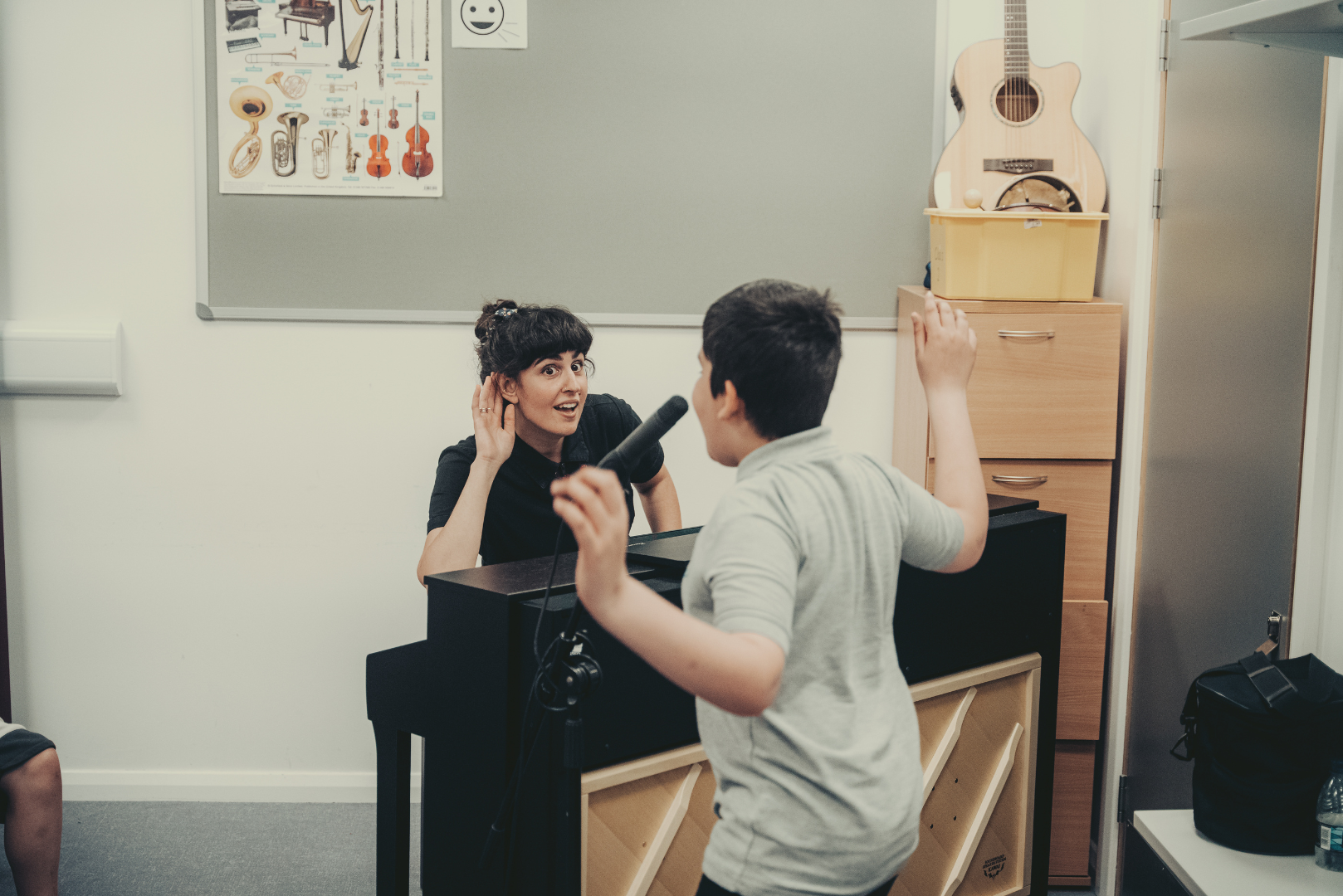
Music therapy is a relatively new but fantastic resource for those in IPCU. It offers opportunities for people to:
- Focus on non-medical aspects of their health and wellbeing
- To collaborate musically with others, building relationships and trust during a difficult period of adjustment to hospital life
- To experience their creative and social side, and learn more about how their psychiatric condition ties in with their identity
- To experience purpose and motivation whilst in the low stimulus environment of a hospital ward
- To express complex emotions through sound and movement
- To reflect on many aspects of life such as love, loss, trauma and identity
My work in an IPCU
From 2023-2024, I facilitated a music therapy service in an IPCU. Here are some stories of my work with three individuals: Matty, Orla, and Tomas.
Matty’s story
Matty was in his forties and experiencing catatonic depression. Unable to move, eat, or communicate, he began electroconvulsive therapy. This helped him regain periods of awareness and function, during which we began music therapy sessions. Matty was also struggling with a break-up with his daughter’s mother, with whom he still had a positive relationship.
Break-ups and challenging relationships are common among people living with psychiatric illnesses, as their symptoms can strain trust and communication with loved ones. Matty and I used music to explore the complex emotions of frustration with his health and regret for its impact on his relationship. I helped him write and record an apology song for his ex-girlfriend, which also allowed him to re-establish his guitar skills.
Matty’s song
My head’s been a mess but I don’t love you less
A hundred million apologies for causing you stress
Love you baby more than you will ever know
I know my love is hidden and sometimes doesn’t show
Orla’s story
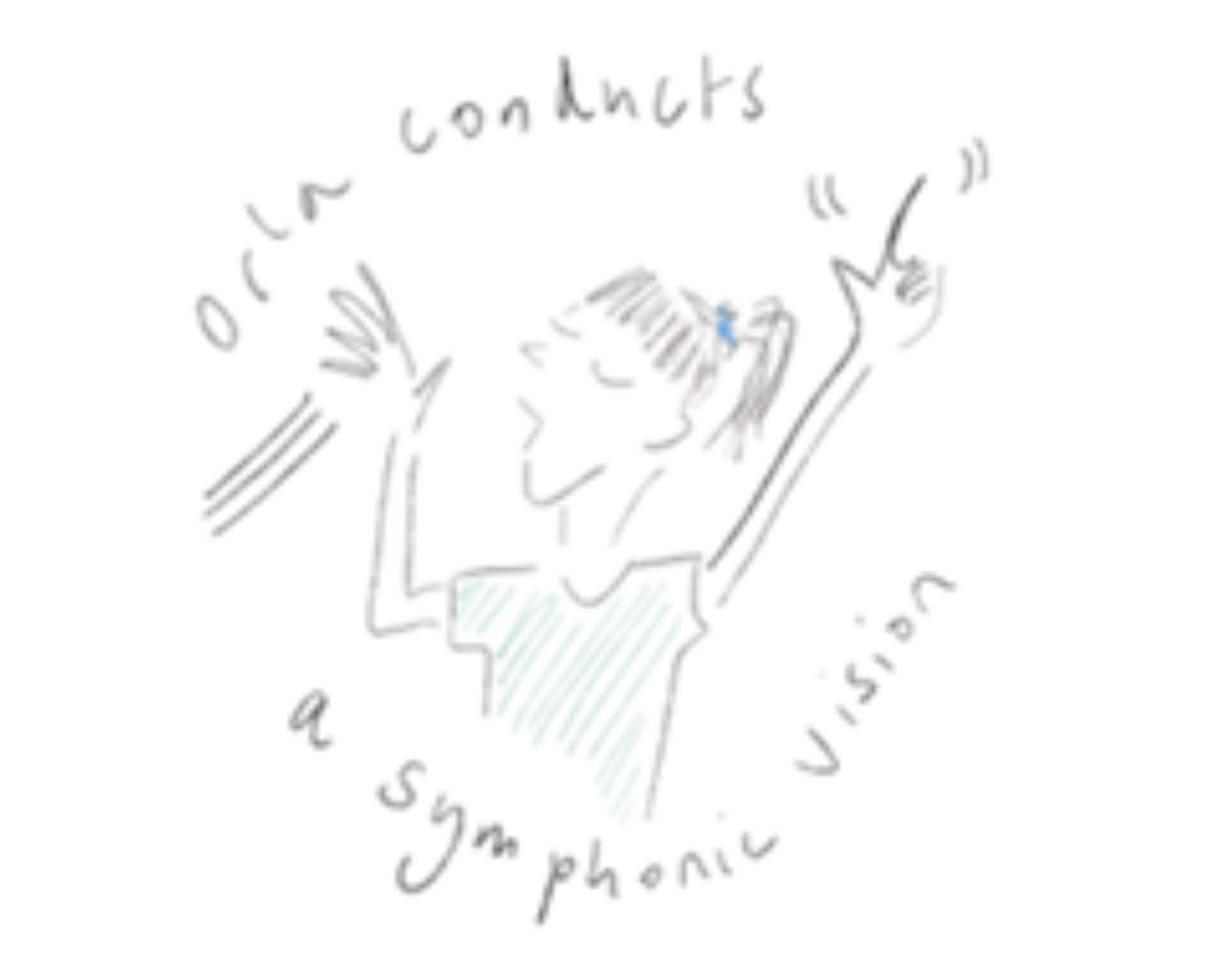
Orla was a young woman experiencing extreme paranoia after an extended period of mania. She was eager to show me her poetry, expressing that she felt she was an artist. Orla had great creative vision. We recorded one of her poems accompanied with piano music she composed with me, which expressed powerful themes of self-forgiveness. She hoped her art could help others living with psychiatric illness find hope and purpose.
Orla’s song
God doesn’t give you what you want, He gives you what you need.
Imagine all the people, together, in harmony, no greed.
An altruistic society, utopia, no one starving, no crime.
For all the bad things I’ve done I repent. I repent. I am a good person.
I have my ups and downs, don’t we all, when we fall, we just get back up and try again,
Hey, that’s what life’s all about, second chances, progress, happiness.
Tomas’ story
Tomas was a young man who was experiencing paranoia and an intense fixed delusion that his father was an international criminal, making Tomas a sought-after informant for the police. He often spoke of wanting to “run away” and lead a “simple life”.
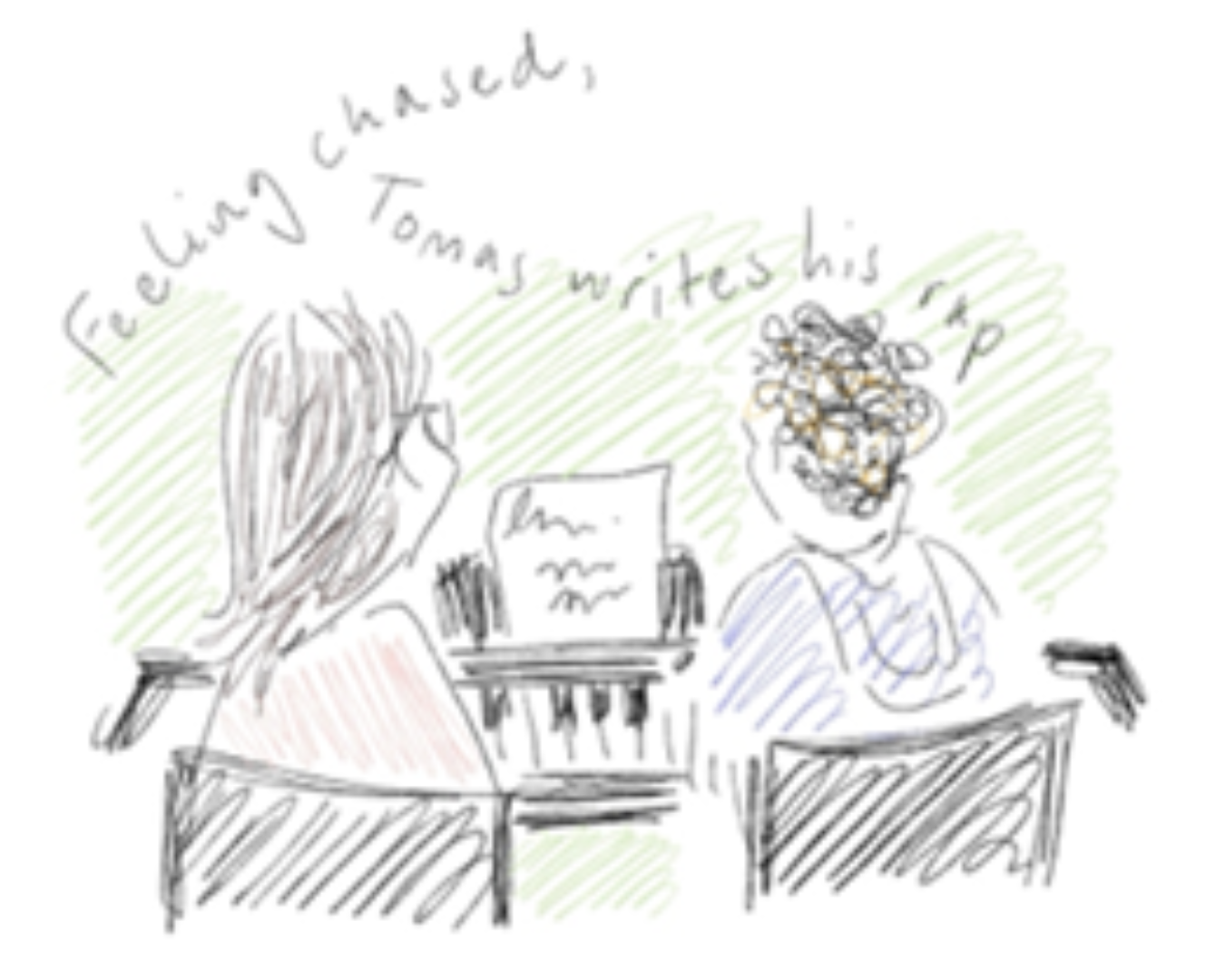
Through music therapy, Tomas was able to express his delusion and paranoia and respect its existence. As we built trust, he felt able to write a rap about how he felt. We spent three weeks writing out the lyrics and piano music, and Tomas became less urgent in expressing the delusion. When we finished the rap, he shared that he knew it wasn’t true, just that it felt real and now he felt heard.
Tomas’ rap
Run, run,
It’s a never-ending game,
A game for fame.
It’s such a shame they give me the blame.
Cos they can’t catch me, they can’t catch me.
I’m starting to trip
My muscles rip.
They’re gaining on me.
I’m starting to see this isn’t the life for me.
Because they can catch me, they can catch me.
Listen up, kids, because you’re getting a lesson. A lesson in life, a lesson in strife. (repeat)
Many people who participated in music therapy in IPCU shared that it made them feel more like a person, helping them beyond their medical health. One person described music therapy as “extremely beneficial to me and my mental health…Helped me relax and have lots of fun.”. “The music therapy sessions have helped me to express my feelings” said another. The theme of expressing emotions through music resonated with everyone I worked with on the ward.
The value of music therapy extended to ward staff too. The Consultant Psychiatrist shared that the sessions helped them track people’s recovery progress and, “widens our own knowledge of a patient’s interests and gives us something to discuss that is not all concentrated on their mental state.”
The experience of music therapy at IPCU was summarised beautifully by the quote below, from a man who attended music therapy for several weeks.
Music helps me to relax; but more importantly it gives me hope. The beat of the song is the beat of my heart.
Latest posts
Can social prescribing support mental health?
How can social prescribing support mental health? Rosie shares her experience of music therapy as a form of social prescribing.
Can technology make music more accessible?
The ‘ReHarp’, a digital instrument designed to support rehabilitation following a stroke or brain injury, is showing how innovation can make music more inclusive, and allow creativity and expression to become a part of recovery.