Music therapy in dementia care
Music therapy is essential, not a ‘nice to have’
Music therapy is a clinically validated, HCPC-regulated practice1 delivered by highly trained professionals. It addresses the emotional, cognitive, physical, communicative, and social needs of people living with dementia at every stage.2
Music therapy is a safe, non-pharmacological intervention that transforms care experiences for people, families, and staff. Backed by research, music therapy:
- reduces agitation and anxiety3
- supports communication when words are lost
- fosters connection where other interventions may fail4
Click on the button below to enquire about bringing music therapy to your organisation.
On this page you’ll find information on the following. Click on each link to find out more:
- The impact of music therapy in dementia care
- Health and wellbeing
- An economic case for music therapy in dementia care
- Key studies
- Staff wellbeing and workforce sustainability
- Equitable access and outcomes
- Reaching those who need us most
- How we support services
- Framework alignment
- How Nordoff and Robbins impacts dementia provision
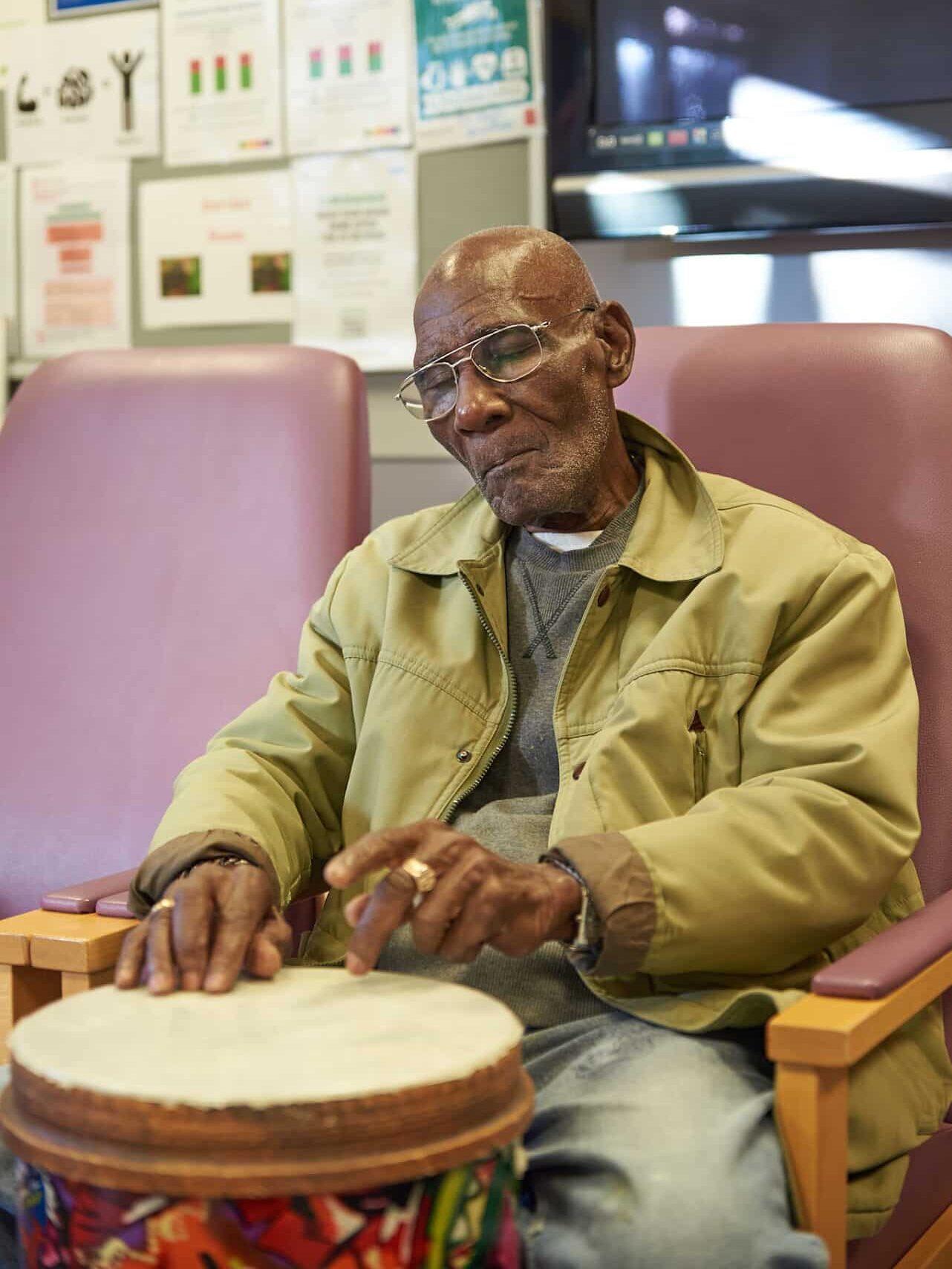
The impact of music therapy in dementia care
We carried out 13 evaluations across 2023 and 2024. 226 respondents were consulted, including those with lived experience. Outcomes collated were:
- 91% of individuals with dementia stated that music therapy had a positive impact on the development of better speech, language and all-round communication
- 93% stated there had been a development of better social skills and interaction
- 87% of individuals with lived experience felt music therapy had enhanced their quality of life
- 90% of family and friends reported that music therapy had enhanced communication with the individual with dementia
- 88% of family and friends observed improved relationships with the person with dementia
- 90% of care staff reported that music therapy enhanced their ability to engage with patients
- 92% of care staff reported an improved relationship with patients
Additionally, Nordoff and Robbins maintains a Dementia Evidence Bank, a curated collection of research, case studies, and evaluations demonstrating the impact of music therapy for people living with dementia.
We can offer music therapy to residents who are often missed by other activities… people with severe dementia can engage meaningfully when other interventions fail.
Care Home Manager
Health and wellbeing
Nordoff and Robbins music therapy delivers wide-ranging benefits for people living with dementia and those around them:
- Emotional impact (reduces apathy, agitation, anxiety, and depression).
- Cognitive support (helps reduce disorientation, stimulates memory recall, and connects people with their sense of identity).
- Communication (removes barriers to connection when words fail, enabling expression and interaction through music).
- Social connections (strengthens bonds between people with dementia, their loved ones, and care staff, creating moments of shared joy and meaning).
- Social inclusion (enhances participation and reduces isolation, including for people with advanced dementia or complex additional needs).
Music therapy reduces agitation and the need for medication in 67% of people with dementia, significantly reducing the spend on anti-psychotic medication.5
An economic case for music therapy in dementia care
Music therapy is a person-centred, non-pharmacological intervention that supports people living with dementia by reducing agitation, enhancing engagement, and improving quality of life. Early studies suggest that it may also provide cost benefits by reducing the need for high-intensity care or medications, though larger-scale evaluation is needed to confirm these findings.3 4 6
Key studies
International studies on the economy of music therapy for health services indicate that music therapy is a cost-effective provision in dementia care. Group music therapy has been shown to reduce agitation with an estimated cost saving of $1,213 per six weeks avoided agitation7, while home hospice programmes reported savings of $2,984 per patient with a favourable cost-benefit ratio.8
Wider health system analysis shows strong returns with two 30-minute sessions per week generating an ROI of $2.40 for every $1 invested across patients and caregivers.9 A recent systematic review further confirmed that music therapy is both efficient and economical for people with Alzheimer’s disease.10
Alongside these direct cost savings, music therapy reduces reliance on medication, lowers the needs for intensive staff support and alleviates pressures associated with behavioural distress, helping create more sustainable models of care while improving quality of life.11
Staff wellbeing and workforce sustainability
- Reduces agitation, enabling safe shifts from 2:1 to 1:1 care.
- Supports staff retention by reducing stress and providing positive shared experiences.12
- Strengthens staff relationships with each other and with those they care for, building resilience and a sense of community within dementia settings.13
- Changes the atmosphere of care environments, making them calmer, safer, and more positive.14
When I have participated in music therapy staff groups I have found it a great way to bond with other members of the team as well as it being a welcome uplifting break from the stress of our jobs.
Staff member
Equitable access and outcomes
- Nordoff and Robbins music therapy reaches people in settings where other interventions cannot, including advanced dementia and those with complex needs.15
- Nordoff and Robbins strives to reduce inequality by providing consistent, high-quality music therapy across care homes, hospitals, and community services, including those outside privately funded settings.16
- Nordoff and Robbins music therapy enhances connection, dignity, and engagement for people often overlooked, ensuring that no one is excluded from the benefits of person-centered care.
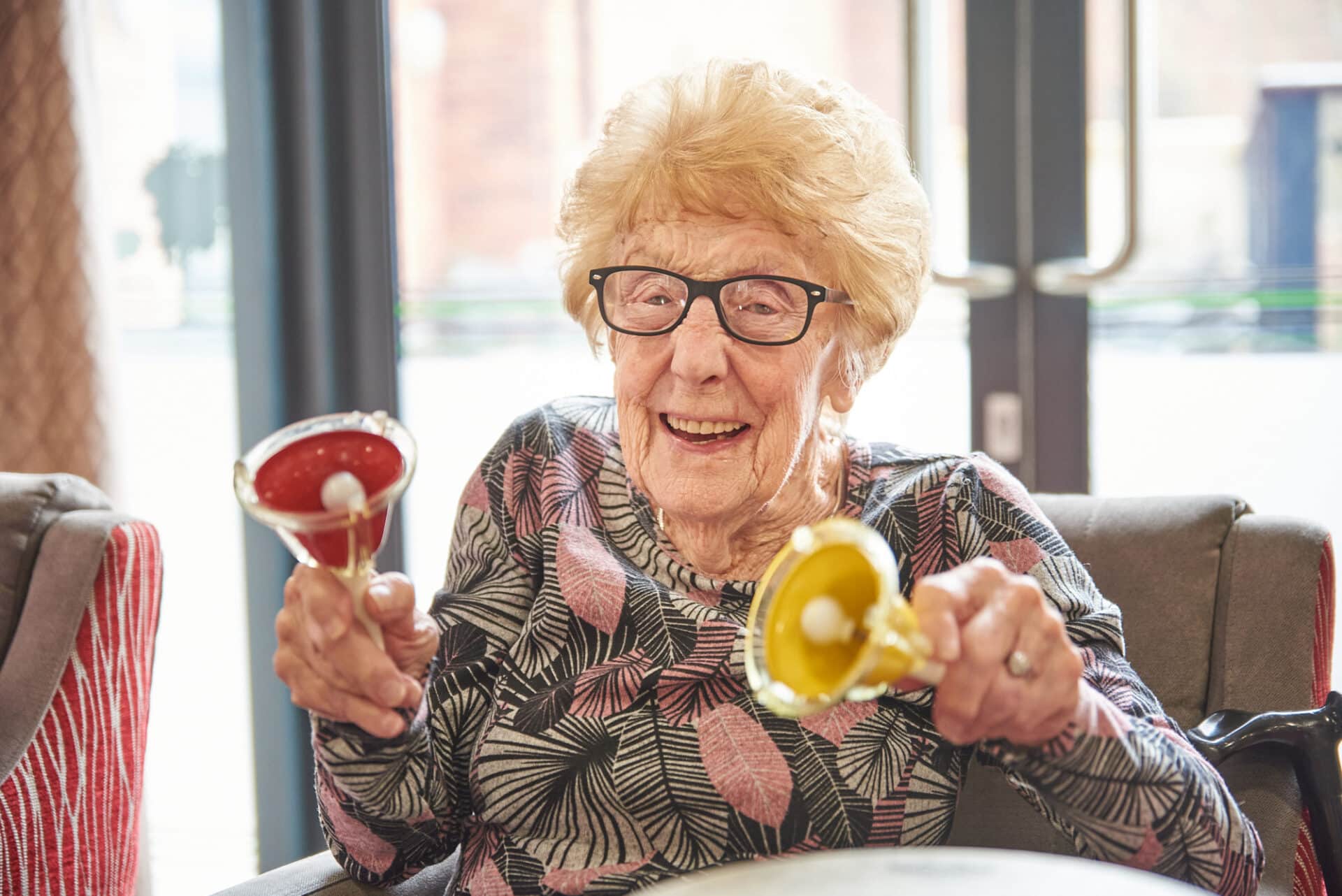
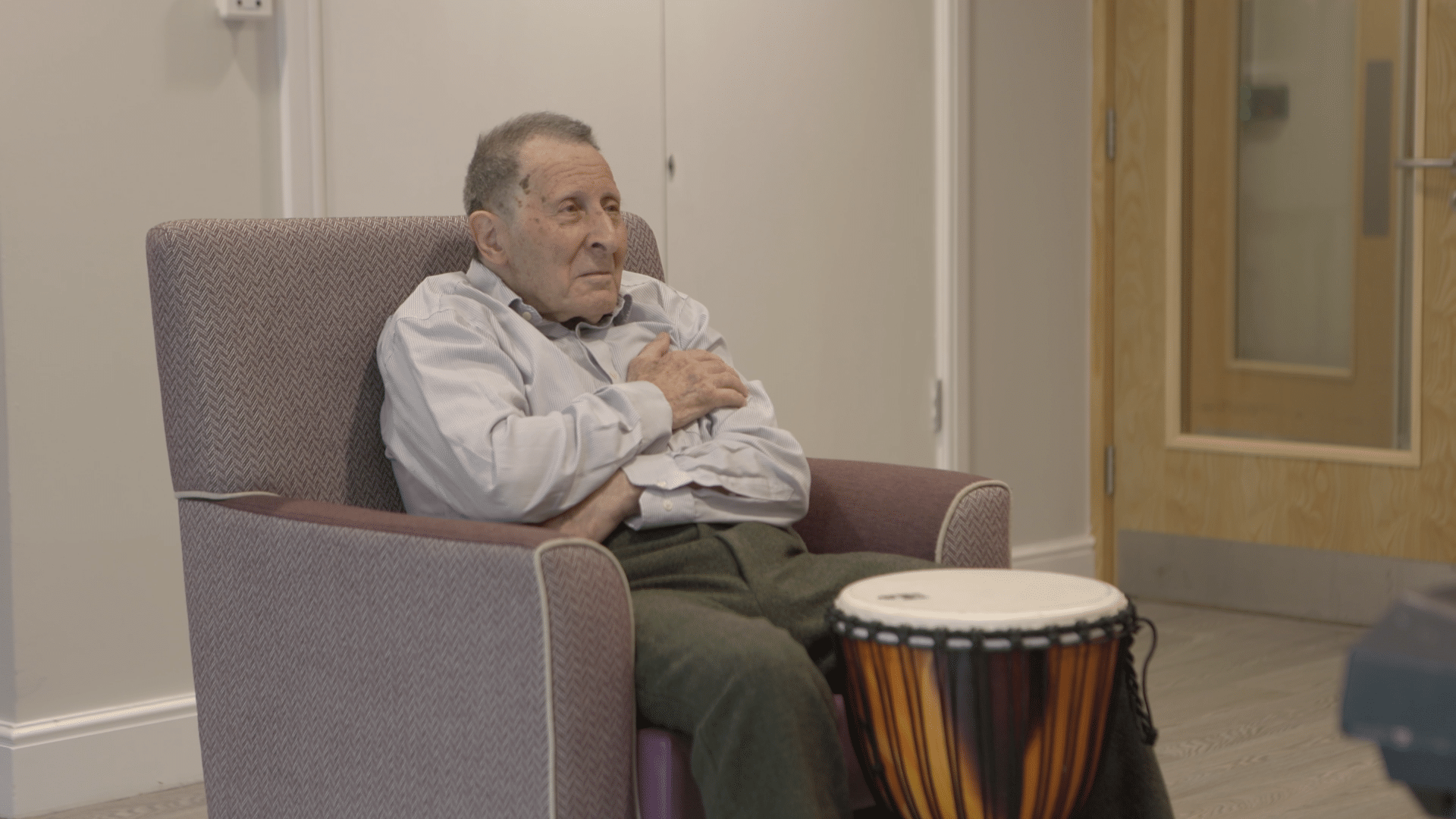
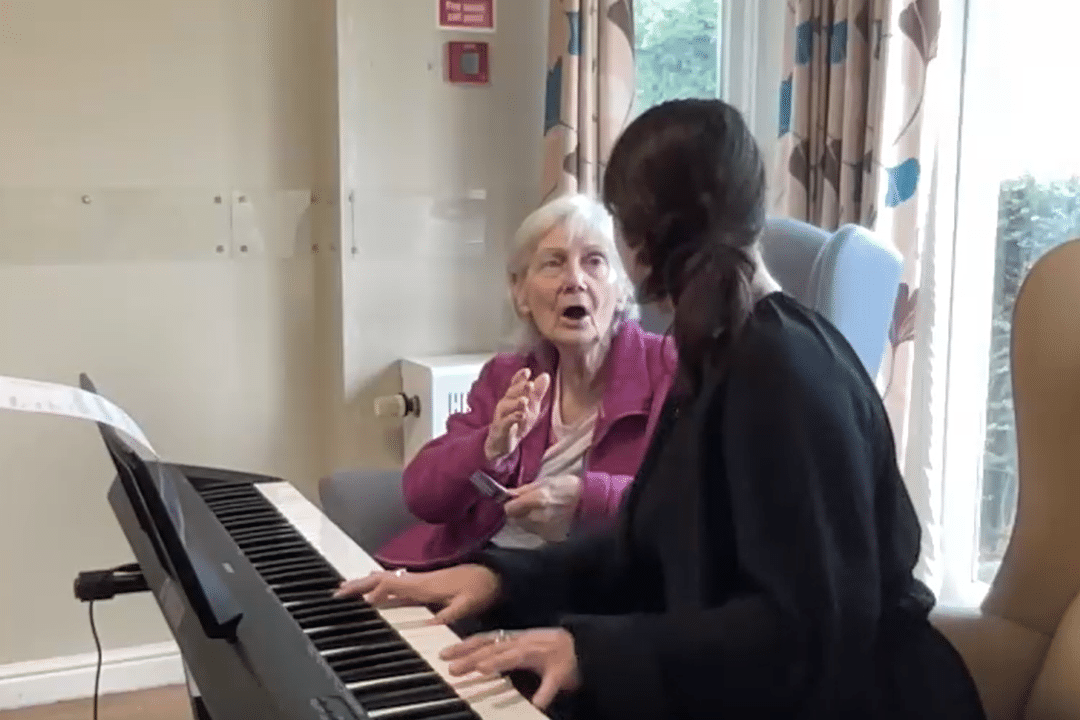
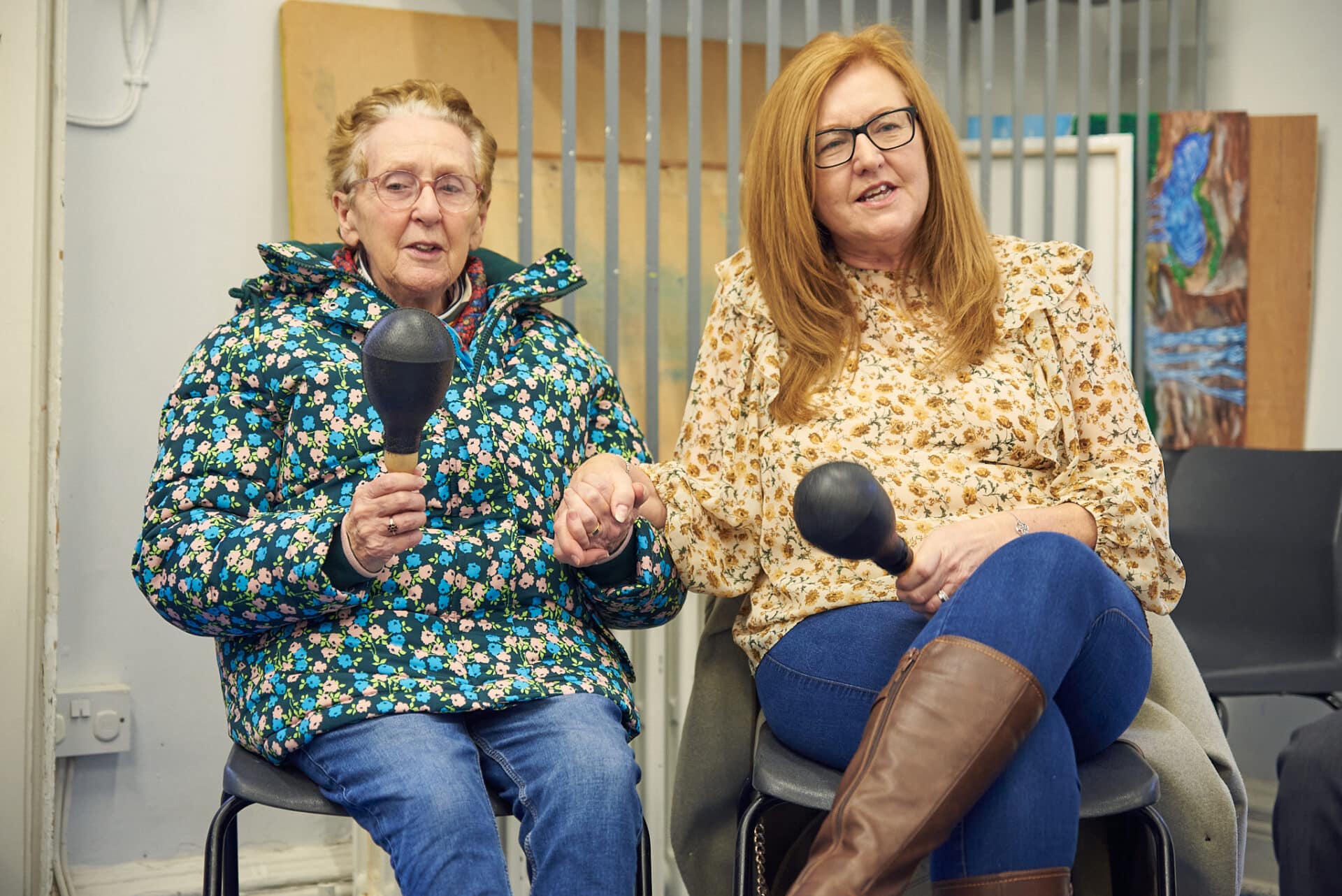
Reaching those who need us most
In 2024, Nordoff and Robbins…
17,876
delivered 17,876 music therapy sessions
1,659
to 1,659 people living with dementia
82
in 82 services across England, Scotland and Wales
Examples of how music therapy can be implemented into services:
- Care Homes: Weekly group sessions for residents with moderate to advanced dementia, including family sessions and staff music sessions. Large open groups and individual sessions are provided for residents who are isolated or have lost communication. One-to-one sessions support those experiencing agitation, apathy, or behavioural challenges.
- Hospitals and memory clinics: One-to-one or small group sessions for patients unable to leave their rooms. We offer bespoke sessions for people living with dementia, including those with co-occurring diagnoses such as mental health conditions, neurodiversity, or disabilities.
- Community hubs and day services (through partner organisations or online provision): Engagement for socially isolated individuals through partnerships with VCSEs and community providers. For example, people from minority ethnic communities facing cultural or language barriers, and those living without family support.
- Specialist outreach: Tailored sessions for individuals with advanced dementia in settings where other interventions are limited, ensuring equitable access to meaningful engagement.
How we support services
Staff skills training ensures music therapy principles are embedded into daily routines and communication, extending the benefits beyond individual sessions alone. Through a partnership approach, we deliver continuity and high-quality, tailored services that reach the most in need. Flexible models, from 1:1 music therapy to small groups and family sessions, integrate with existing provision and enable full and equitable access.
Music therapy is of great value in promoting social interaction and wellbeing and is something that patients and carers look forward to.
Doctor
Framework alignment
Nordoff and Robbins music therapy provision aligns with:
Gold Standards Framework (GSF) for End-of-Life Care17. Music therapy attends to the person carefully and flexibly providing opportunity for emotional comfort, pain management, and connection when verbal communication declines at the end of life. By attending to the individual and their personal musical choices or improvisation that responds in the moment, we support identity, dignity and creative contribution. We enable the individual to have shared experiences with their loved ones.
NHS Long Term Plan18. The Long Term Plan emphasises non-pharmacological approaches to care, reducing reliance on medication and improving wellbeing through holistic interventions. Music therapy directly supports this vision by offering evidence-based, creative provision that reduces agitation, anxiety and apathy without medication, while enhancing mood, communication and quality of life. It also supports the wider care environment, supporting staff to engage and connect with clients, supporting staff wellbeing and resilient care services.
NHS Core20PLUS519. The prioritisation of inclusion and equity, addressing health inequalities for underserved groups and those at highest risk can be supported practically and tangibly by music therapy. Music therapy aligns by being inherently adaptable and accessible, it does not depend on language, literacy or physical ability and it can meet people wherever they are. Music therapy is accessible for people with complex and varied needs or those with co-occurring conditions. Music reflects each person’s lived experiences, preferences, including cultural resonances. Our therapists create spaces for authentic expression, responding to individual contributions and supporting a strong sense of self.
Care Quality Commission (CQC) Standards20. The standards highlight dignity, person-centred care and positive experiences. Music therapy supports these aims by tailoring each session to the needs of the individual, their musical preferences, identity and way of being, ensuring they are recognised as a person with strengths and potential for connection rather than being defined by their diagnosis. By enabling joy, creativity and meaningful connection, music therapy enhances the lived experience of care. At Nordoff & Robbins we are committed to compassionate, person-centred provision.
National Dementia Strategy21. This strategy calls for integrated, person-centred pathways of support for people living with dementia. Music therapy contributes by bridging medical, social and emotional facets of care, working alongside health professionals, care staff and families to provide opportunities for engagement. The flexibility of our approach means it can be embedded across settings, from hospitals and care homes, to community services, making it a practical, economic and adaptable part of dementia care.
When I’ve been in the building when music therapy has taken part there’s always a positive atmosphere for both staff, patients, and their loved ones. It’s incredibly difficult to stay sombre or negative when surrounded by music, particularly when you can see and hear the joy a group of people have during the session. It’s a lovely thing to have and I hope it remains a permanent fixture.
Nurse
How Nordoff and Robbins impacts dementia provision
Through person-centred music therapy, and by supporting people with dementia to experience dignity, joy, and connection, we collaborate to advance equity, enhance wellbeing, and improve quality of care across all stages of dementia. Our approach is flexible to respond to different care settings, with a priority on reaching those most in need of equitable opportunities for health.
Nordoff and Robbins is the UK’s largest independent music therapy charity, combining expert training, research, and delivery. All music therapists are HCPC-registered, a protected professional title requiring Masters-level training, ensuring safe, evidence-based, and high-quality outcomes.
We work closely with commissioners, providers, and partner organisations to embed music therapy into services, strengthen staff skills, and enhance the impact of dementia care. We welcome discussion on collaborative approaches, tailored programmes, and opportunities to extend support to underserved populations.
For more information or to explore collaboration, please contact:
Esma Perkins, Head of Service Development
Email: [email protected]
Phone: 07944 016340
Or alternatively fill out the form below to enquire about bringing music therapy to your organisation.
References
- Health & Care Professions Council (HCPC). (2023) Music Therapists – Standards of Proficiency. London: HCPC. https://www.hcpc-uk.org/
- British Association for Music Therapy (BAMT). (2023) What is Music Therapy? London: BAMT. https://www.bamt.org/
- Raglio, A., Bellelli, G., Traficante, D., et al. (2008) ‘Efficacy of music therapy in the treatment of behavioral and psychiatric symptoms of dementia.’ Alzheimer Disease & Associated Disorders, 22(2), pp. 158–162.
- Brotons, M. and Koger, S.M. (2000) ‘The impact of music therapy on language functioning in dementia.’ Journal of Music Therapy, 37(3), pp. 183–195.
- APPG on Arts, Health, and Wellbeing. (2017). Creative Health: The Arts for Health and Wellbeing. https://www.culturehealthandwellbeing.org.uk/appg-inquiry/
- Agency for Healthcare Research and Quality (AHRQ). (2016) Nonpharmacologic Interventions for Agitation and Aggression in Dementia. Comparative Effectiveness Review No. 177. Rockville, MD: Agency for Healthcare Research and Quality.
- Value in Health Journal. (2023) ‘Group music therapy reduced clinically significant agitation with an ICER of −$1,213 per 6 weeks of avoided agitation.’ Value in Health.
- Romo, R.D. and Gifford, L. (2007) ‘Economic cost savings of home hospice music therapy.’ Journal of Palliative Medicine, 10(3), pp. 729–732
- Deloitte Canada. (2025) The ROI of Music Therapy in Dementia Care: Two 30-minute sessions per week delivered an ROI of $2.40 per dollar invested across patients and caregivers. Deloitte Canada.
- Wang, J., Liu, C., Dai, Y., Mei, C., Wang, G., Wang, Y., Huang, T., Zhan, J., & Cheng, J. (2025) ‘Efficacy of music therapy as a non-pharmacological measure to support Alzheimer’s disease patients: A systematic review.’ BMC Geriatrics, 25(1), 508. https://doi.org/10.1186/s12877-025-06073-7
- Agency for Healthcare Research and Quality (AHRQ). (2016) Nonpharmacologic Interventions for Agitation and Aggression in Dementia. Comparative Effectiveness Review No. 177. Rockville, MD: Agency for Healthcare Research and Quality.
- Health Education England. (2020) Workforce Wellbeing and Sustainability in Dementia Care. London: HEE.
- Hsu, M.H. and Flowerdew, R. (2017) ‘Music therapy for dementia: Effects on agitation, quality of life and staff perceptions.’ Journal of Music Therapy, 54(2), pp. 123–142
- Chatterton, M.L., et al. (2010) ‘Effect of music therapy on the care environment in dementia units.’ Aging & Mental Health, 14(8), pp. 927–935.
- Nordoff, P. and Robbins, C. (2007) Creative Music Therapy: A Guide to Nordoff-Robbins Approaches. London: Jessica Kingsley Publishers.
- Nordoff-Robbins Music Therapy UK. (2023) Annual Report 2022–2023. London: Nordoff-Robbins.
- Gold Standards Framework (GSF). (2023) Gold Standards Framework for End-of-Life Care. https://www.goldstandardsframework.org.uk/
- NHS England. (2019) NHS Long Term Plan. London: NHS England. https://www.longtermplan.nhs.uk/
- NHS England. (2022) Core20PLUS5 Approach to Reducing Health Inequalities. London: NHS England. https://www.england.nhs.uk/
- Care Quality Commission (CQC). (2023) Fundamental Standards and Key Lines of Enquiry. London: CQC. https://www.cqc.org.uk/
- Department of Health & Social Care. (2021) National Dementia Strategy. London: DHSC.